
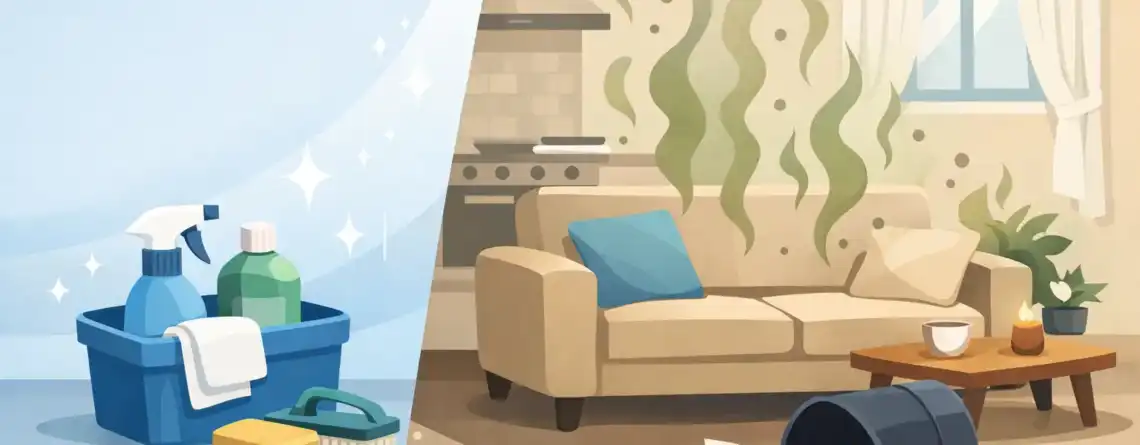
You mop the floors, wipe the counters, empty the trash, and spray air freshener – yet the smell is still there. If you are wondering why your home still smells bad after cleaning, the answer is usually simple: the odor source was not removed, only covered up. A home can look spotless and still hold odors in fabric, drains, moisture, hidden dirt, or pest activity.
That is what makes lingering smells so frustrating. They often come from places people do not clean deeply, do not clean often enough, or do not realize need attention at all. Once you know where odor actually lives, it becomes much easier to fix the problem properly instead of masking it for a few hours.
Why your home still smells bad after cleaning
Most bad smells come from trapped organic matter, moisture, bacteria, or airflow problems. Standard surface cleaning helps with appearance, but odors usually settle into soft materials and closed spaces. That includes carpets, sofa cushions, mattresses, shoe cabinets, AC vents, garbage bins, bathroom drains, and even walls near cooking areas.
In many homes, the issue is not that cleaning was done incorrectly. It is that regular cleaning is not the same as odor removal. Wiping visible dust and disinfecting a bathroom sink will not solve smells caused by deep upholstery buildup, pet contamination, damp corners, or grease inside the kitchen exhaust area.
That is why a fresh-smelling home depends on more than neat surfaces. It depends on removing residue from the exact place the smell starts.
The most common hidden odor sources
Kitchen smells are one of the biggest causes. Food splashes behind appliances, grease on cabinets, dirty sink overflows, and neglected trash bins can all create a sour or stale odor. Even if countertops are cleaned daily, hidden food residue under the stove or inside the microwave seal may still be causing the problem.
Bathrooms are another major source. Drain buildup, damp bath mats, mildew around tile grout, and moisture trapped behind toilets can all create persistent smells. In some cases, the bathroom looks clean but still smells bad because bacteria are growing in places that are not reached during quick cleaning.
Soft furnishings also hold odor longer than most people expect. Carpets absorb spills, dust, sweat, cooking smells, and pet dander. Sofas and curtains trap airborne particles every day. If these materials are not washed or deep cleaned, they keep releasing odor back into the room.
Air conditioning can make the problem worse. If filters are dirty or humidity stays high indoors, smells linger longer and spread from one room to another. This is especially relevant in warm climates where indoor cooling runs for long hours and moisture control matters.
Bad smells often come from moisture, not dirt
One of the most overlooked causes of odor is hidden dampness. A room may smell musty not because it is dirty, but because moisture is trapped in fabric, walls, under sinks, or around windows. Even minor leaks can create a stale smell that no amount of mopping will fix.
This is why some homes smell worse after cleaning. If too much water is used on carpets, mattresses, or upholstery without proper drying, the moisture stays inside the material. That creates the perfect environment for odor-causing bacteria and mold.
The same thing happens in bathrooms and kitchens with poor ventilation. Steam, splashes, and daily use keep surfaces damp for longer than expected. If the area never fully dries, the smell returns again and again.
Cleaning mistakes that make odors stay longer
Using strong fragrance is not the same as removing odor. Air fresheners, perfumed floor cleaners, and scented sprays can temporarily improve the smell, but they do not solve the source. In some cases, they mix with the existing odor and make the air feel heavier.
Another common mistake is cleaning only what is easy to see. Floors, sinks, and counters get attention, while upholstery, mattresses, drains, and under-furniture areas are skipped. Odor usually survives in the places that are less visible and less frequently cleaned.
Dirty tools can also spread smell instead of removing it. A mop head, sponge, vacuum filter, or cleaning cloth that has not been washed properly may carry bacteria and old residue from one area to another. This is especially common in kitchens and bathrooms.
Sometimes the issue is timing. If trash is emptied but the bin is not washed, or if pet areas are cleaned without disinfecting the surrounding floor, odor returns quickly. Lasting freshness depends on treating both the source and the surfaces around it.
When the smell is really coming from fabric and upholstery
If your home smells stale even after full room cleaning, soft surfaces are a likely reason. Upholstery, rugs, curtains, and mattresses absorb odor slowly over time. Because the buildup is gradual, many people stop noticing how much these items affect the overall smell until the house no longer feels fresh.
This is especially common in homes with children, pets, frequent cooking, or closed windows. Fabric traps body oils, food particles, smoke residue, dust, and humidity. Vacuuming helps, but it rarely removes deep odor on its own.
Professional deep cleaning is often the turning point here. Carpet cleaning, sofa cleaning, and mattress treatment remove embedded dirt that ordinary household products cannot fully reach. Once the trapped residue is removed, the entire room smells cleaner, not just the surface of it.
Odor can also point to pests or sanitation issues
Not every bad smell is a cleaning issue alone. In some cases, it is a warning sign of pests. Cockroaches, rodents, and other infestations often create noticeable odors, especially when activity is hidden behind cabinets, inside storage areas, or near drains.
A musty, oily, or sharp unpleasant smell that keeps returning after cleaning should not be ignored. Droppings, nesting materials, and pest-contaminated spaces can continue producing odor no matter how often visible surfaces are cleaned.
This is where cleaning and pest control need to work together. Removing the smell without removing the infestation only delays the problem. For homes and businesses dealing with repeated odor in kitchens, storage spaces, or service areas, a combined hygiene and pest inspection is often the most effective solution.
How to fix the problem properly
Start by identifying where the smell is strongest. If it is worse near the sink, the issue may be the drain or garbage area. If it gets stronger when the AC runs, check filters and humidity. If the room smells stale even when everything looks clean, focus on carpets, curtains, and upholstered furniture.
Next, clean for residue, not just appearance. Wash bins, disinfect drains, move furniture, clean under appliances, and treat soft surfaces that absorb odor. If there has been any spill, leak, or pet accident, make sure the material underneath was cleaned too.
Ventilation matters just as much as product choice. Open windows when possible, allow surfaces to dry fully, and avoid over-wetting carpets or fabric. A home that stays damp will not stay fresh for long.
For stubborn cases, deep cleaning is usually more cost-effective than repeated surface cleaning. A trained team can target buildup in carpets, sofas, mattresses, kitchens, bathrooms, and other problem areas with the right equipment and safe products. For many households, that is the difference between a home that smells perfumed for one afternoon and a home that actually smells clean.
When to call professionals
If the odor returns within a day or two, there is usually a deeper cause. That may be moisture, hidden contamination, heavy fabric buildup, drain issues, or pest activity. The longer the smell has been present, the less likely it is that standard cleaning products will solve it completely.
Professional help is also worth considering before guests arrive, after moving into a new property, after renovations, or when routine cleaning is no longer enough to keep the home fresh. In busy households and larger villas, odor control often requires a more thorough approach than weekly cleaning can provide.
For residents who want a spotless, hygienic result without trial and error, a company like Hegy International can handle deep cleaning and pest-related hygiene concerns in one service plan. That saves time, reduces repeat problems, and gives you a clearer answer when the smell is coming from more than one source.
A clean-looking home is not always a clean-smelling one. When odor keeps coming back, it is usually because something hidden is being missed. Find the source, remove the residue, dry the space properly, and the freshness will finally last.