
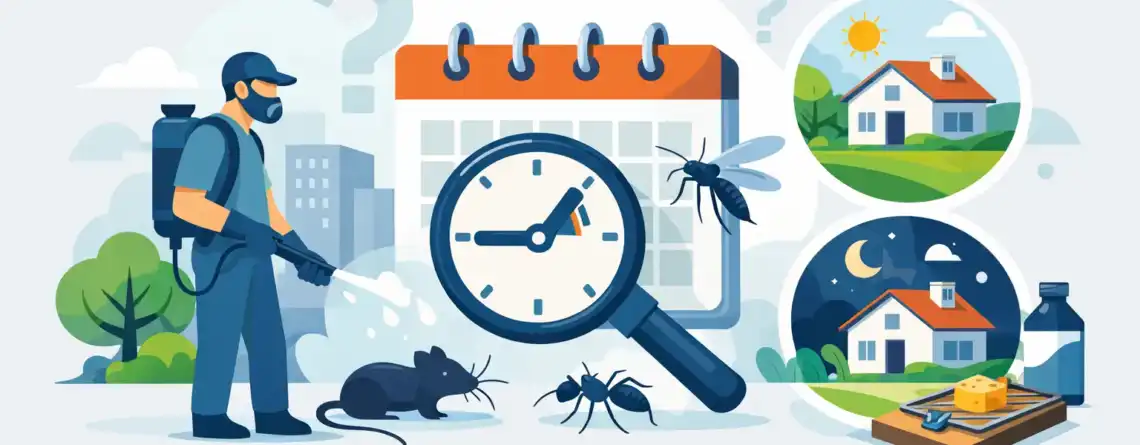
Seeing one cockroach in the kitchen at night usually means there are more hiding where you cannot see them. That is why many property owners ask, how often should pest control be done? The right answer depends on the type of property, the pest involved, and how much risk you can afford to tolerate.
For some homes, a preventive treatment every few months is enough to keep common pests under control. For restaurants, clinics, shared buildings, and properties with a past infestation, waiting too long between visits can turn a small issue into a costly one. A good pest control schedule is not about spraying more often than needed. It is about treating at the right time, with safe products, and following a plan that fits the space.
How often should pest control be done for most properties?
As a general rule, most residential properties do well with professional pest control every 3 to 6 months. This range works for common preventive care and helps reduce the chance of cockroaches, ants, spiders, and rodents becoming established indoors.
That said, prevention and active infestation are not the same thing. If pests are already present, the first treatment is often only the start. Bedbugs, termites, severe cockroach activity, and rodent problems usually need follow-up visits much sooner, sometimes within days or weeks, until the issue is fully controlled.
Commercial spaces usually need more frequent service than homes. Offices may need monthly or bi-monthly visits depending on foot traffic, food consumption, and waste handling. Restaurants, food service areas, schools, clinics, and warehouses often benefit from regular scheduled inspections because even a minor pest problem can affect hygiene, reputation, and compliance.
What changes the right pest control schedule?
The biggest factor is the pest itself. Not all infestations behave the same way. Cockroaches reproduce quickly and hide in wall gaps, under sinks, and behind appliances, so they often require a tighter treatment cycle at the start. Ants may seem easier to handle, but if the colony source is not addressed, they can keep returning. Termites are a different category altogether because they work quietly and cause structural damage before most people notice them.
Property type also matters. A villa with a garden, outdoor drains, and more entry points may need more attention than a small apartment on a high floor. Ground-level units, older buildings, and properties near waste areas or moisture sources usually face higher pest pressure.
Daily habits inside the space make a difference too. Crumbs under furniture, food left out overnight, overflowing bins, and standing water all give pests a reason to stay. Even with professional treatment, poor sanitation can shorten the results. On the other hand, a clean, well-maintained property often stays protected longer between visits.
Seasonal conditions can also influence scheduling. Warm weather tends to increase pest activity, especially for ants, cockroaches, and flying insects. In climates where heat is intense for much of the year, pests do not always follow the same neat seasonal pattern seen elsewhere. That is why fixed annual treatment plans can be less effective than a schedule based on actual property conditions.
A practical pest control timeline by situation
If you are managing a typical home with no active infestation, every 3 to 6 months is usually a sensible preventive schedule. This gives enough coverage to interrupt common pest activity without over-treating the space.
If you have children, pets, or elderly family members at home, safety naturally becomes part of the decision. In those cases, professional service matters even more because product selection, placement, and application method should match the household. Non-toxic or pet-safe treatment options can be built into a routine plan without sacrificing effectiveness.
If you have already seen signs of pests, the timing should be shorter. For active cockroach or ant issues, an initial treatment followed by a review or second visit within 2 to 4 weeks is common. That follow-up gives the technician a chance to check whether activity has dropped, whether hiding areas were fully addressed, and whether another round is needed.
For bedbugs, monthly prevention is not the right model because the problem should be handled intensively and completely, not casually maintained. These cases need a targeted treatment program with close follow-up until there is no remaining activity.
Rodent control often needs ongoing monitoring, especially in commercial spaces or buildings with waste areas, loading access, or open service entries. A single visit may reduce the immediate problem, but without sealing entry points and checking traps or stations, rodents can return.
Termite control follows its own schedule. Preventive inspection should be done regularly, and any active issue needs immediate treatment rather than waiting for the next routine service date. With termites, delay is expensive.
How often should pest control be done in businesses?
Businesses usually need a more disciplined schedule because the stakes are higher. A homeowner may tolerate the occasional ant trail for a day or two before booking service. A restaurant, clinic, or retail business cannot afford that kind of delay.
For many offices, pest control every 1 to 3 months is appropriate. The exact timing depends on pantry use, building age, cleaning standards, and whether food is regularly consumed at desks or shared break areas. Offices with low food exposure may need less frequent service than those with busy kitchens and high staff traffic.
Restaurants, cafes, supermarkets, schools, and healthcare environments often need monthly service or even tighter inspection routines. These spaces have more waste, more delivery movement, more hidden storage areas, and more reputational risk. Pest control in these settings is not just about comfort. It is part of maintaining a hygienic and professionally managed environment.
Property managers and facility teams should also think beyond visible pests. Scheduled service helps detect issues early, before tenants complain or operations are disrupted. For larger buildings, recurring treatment can be more cost-effective than repeated emergency callouts.
Signs your current pest control schedule is too far apart
If pests keep coming back before the next booked visit, your interval is probably too long. The same applies if you are seeing fresh droppings, egg cases, gnaw marks, bite complaints, or recurring insect activity in the same areas.
Another warning sign is when treatment seems to work for only a short time. That does not always mean the service failed. It may mean the source was not fully removed, surrounding conditions are attracting pests again, or the property needs a more frequent maintenance cycle.
You should also review your schedule after any major change in the property. Renovation work, water leaks, new neighboring construction, changes in waste handling, or periods of vacancy can all shift pest activity. What worked last year may not be the right plan now.
Why DIY timing often falls short
Many people try store-bought sprays first and only call professionals when the problem grows. The issue is not just product strength. It is timing, coverage, and correct identification. Treating ants like cockroaches, or handling a rodent issue as if it were only a sanitation problem, wastes time.
DIY treatments also tend to focus on visible pests rather than nesting sites, entry points, and breeding cycles. That can create the impression that the issue is gone when it is only temporarily reduced. A professional schedule is built around pest behavior, not guesswork.
For households and businesses that want reliable results, recurring service is usually more practical than repeated spot treatment. It reduces surprises, helps protect hygiene standards, and keeps minor issues from becoming full infestations.
Choosing the right schedule with a professional
The best pest control plan starts with an inspection, not a fixed promise that every property needs the same frequency. A good provider looks at the pest type, layout, moisture levels, sanitation conditions, access points, and previous activity before recommending a treatment calendar.
For many homes, that recommendation will land at quarterly or bi-annual service. For high-risk businesses, it may be monthly. For active infestations, the schedule may begin with close follow-up and then shift into preventive maintenance once the problem is cleared.
This is where working with an experienced team makes a difference. A provider like Hegy International can match safe, effective treatment to the actual conditions of the property rather than pushing unnecessary visits. That matters when you want results that are affordable, hygienic, and practical for everyday living or business operations.
If you are unsure how often your property should be treated, start by looking at what the space is telling you. A few pests once a year is one situation. Recurring sightings, customer-facing risk, or signs of hidden activity are another. The right schedule is the one that keeps the problem from getting a foothold in the first place.