
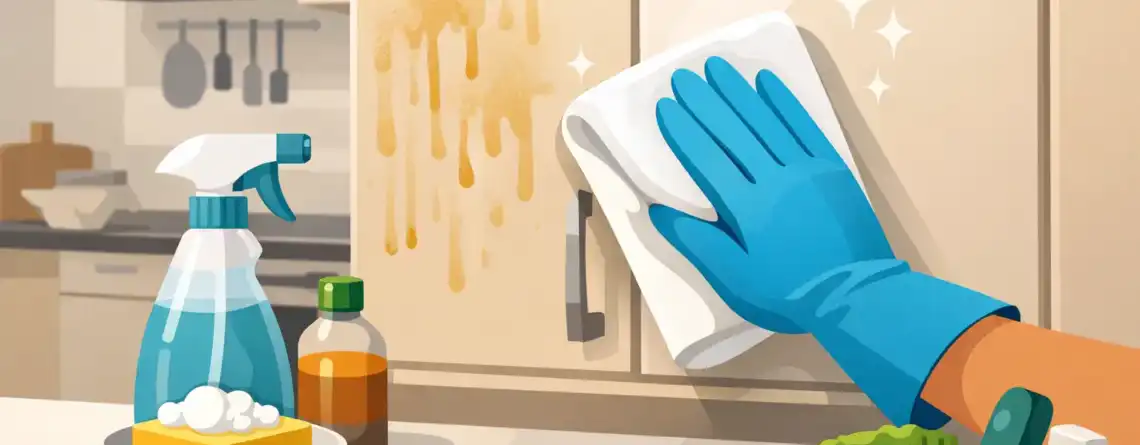
That sticky film on your cabinet doors usually builds up slowly, then all at once starts making the whole kitchen look dull. If you’re wondering how to remove grease from kitchen cabinets without damaging the finish, the right method depends on the cabinet material, how heavy the buildup is, and whether the grease is fresh or baked on.
Kitchen cabinet grease is rarely just oil. It is usually a mix of cooking residue, dust, moisture, and fingerprints. That is why wiping with plain water often smears the surface instead of cleaning it. The good news is that most cabinet grease can be removed with gentle products, a soft cloth, and a little patience.
How to remove grease from kitchen cabinets without damage
Start with the least aggressive option. This matters because wood, painted cabinets, laminate, and thermofoil do not all react the same way to cleaners. A method that works well on laminate may strip sheen from painted wood if used too aggressively.
For light grease, mix a few drops of dish soap into warm water. Dip a microfiber cloth into the solution, wring it out well, and wipe the cabinet surface in small sections. Follow immediately with a second cloth dampened with clean water, then dry the area with a soft towel. This simple process removes a surprising amount of residue when done consistently instead of soaking the surface.
Dish soap works because it is designed to break down oil. The key is not to over-wet the cabinet. Water left sitting along edges, joints, or hardware can cause swelling, discoloration, or peeling over time.
If the buildup is moderate, add white vinegar to the routine carefully. A mix of equal parts warm water and white vinegar can cut through grease more effectively than soap alone, especially around handles and above the stove. Test it on a hidden spot first. Vinegar can be too harsh for some delicate finishes, especially older painted cabinets or natural wood with a worn topcoat.
For stubborn spots, make a paste with baking soda and a small amount of water. Apply it gently with a soft cloth, rub only where needed, and wipe away residue right after. This works well on greasy fingerprints and thick patches near cooking areas, but it should be used with restraint. Baking soda is mildly abrasive, and scrubbing too hard can dull the finish.
The best method depends on your cabinet type
Before you clean deeply, identify what your cabinets are made of. This step saves time and helps avoid expensive repairs.
Painted cabinets
Painted cabinets need a gentle approach. Warm water, mild dish soap, and a microfiber cloth are usually the safest choice. Avoid strong degreasers unless the manufacturer specifically recommends them. If the surface is glossy, too much friction can leave visible dull patches.
Sticky grime around handles often lifts better if you hold a warm, damp cloth on the area for a minute before wiping. That softens the grease so you can remove it without scraping.
Wood cabinets
Wood cabinets are more sensitive to moisture and harsh ingredients. Use a lightly damp cloth, not a wet one, and dry immediately. If dish soap alone is not enough, use a wood-safe cleaner rather than experimenting with stronger homemade solutions.
Avoid soaking around carved details or panel seams. Grease likes to settle there, but so does water. A soft toothbrush or detailing brush can help loosen buildup in grooves without flooding the area.
Laminate cabinets
Laminate is generally more forgiving and easier to clean. Dish soap, diluted vinegar, or a non-abrasive kitchen cleaner can all work well. Still, avoid steel wool, rough scrub pads, or anything gritty. Once the laminate surface gets scratched, it tends to attract even more grime.
Thermofoil cabinets
Thermofoil cabinets should be treated gently because heat and harsh chemicals can weaken the outer layer. Use warm soapy water and a soft cloth. Do not use bleach, strong solvents, or steam. Those shortcuts can cause lifting or peeling along the edges.
Where grease builds up the most
Some cabinet areas always get dirtier faster. The doors closest to the stove usually collect the heaviest layer, especially upper cabinets. Handles, edges near the trash area, and cabinets above small appliances are also common trouble spots.
If you only clean the center of each door, the kitchen may still look dirty. Focus on corners, lower edges, and the narrow strip beside the hardware. These high-touch areas collect both grease and skin oils, which creates that tacky feel.
A good routine is to clean from top to bottom and left to right. That keeps you from missing sections and prevents dirty drips from landing on areas you already finished.
What to avoid when removing cabinet grease
Many cabinet finishes are damaged by the cleaning method, not the grease itself. That is why using the strongest product first is rarely the best move.
Avoid bleach for everyday cabinet grease. It does not cut oil as effectively as dish soap or a proper degreaser, and it can discolor surfaces. Strong all-purpose cleaners can also leave streaks or wear down protective finishes over time.
Magic erasers can help in some cases, but they act like very fine sandpaper. On matte or painted cabinets, they may remove marks and also remove part of the finish. Use them only as a last resort and only on a tested spot.
Steam cleaners are another risk. They may seem efficient, but prolonged heat and moisture can warp wood, loosen glue, and damage thermofoil surfaces. The same goes for soaking cabinets with spray and letting cleaner sit too long.
How to clean heavy grease that has hardened
Old grease needs more than a quick wipe. Start by loosening it rather than scrubbing aggressively. Apply a warm cloth to the area for a minute, then wipe with dish soap solution. Repeat once or twice before moving to a stronger option.
If that still does not work, use a cabinet-safe degreaser according to the label instructions. Spray it onto the cloth instead of directly onto the cabinet unless the product says otherwise. This gives you more control and reduces the chance of cleaner collecting in seams or dripping behind hardware.
For detailed corners, use a soft brush or cotton swab. Heavy buildup often hides around hinges and decorative trim. Clean these areas slowly and dry them well. Rushing usually means pushing grease deeper into crevices.
If the cabinets have not been deep cleaned in a long time, it may take two rounds to fully remove the residue. That is normal. Thick grease layers often loosen in stages.
How to keep grease from coming back so quickly
The easiest cabinet grease to remove is the grease that never hardens. A light weekly wipe-down with a barely damp microfiber cloth can make a major difference. In busy kitchens, especially where frying is common, cleaning cabinet fronts every one to two weeks prevents buildup from turning stubborn.
Using the exhaust fan while cooking also helps. It will not catch everything, but it reduces the amount of airborne oil settling on upper cabinets. Splash zones near the stove should be wiped soon after cooking once the area cools.
It also helps to clean handles more often than the rest of the cabinet. They collect grease from hands even when the doors look clean from a distance. Keeping those high-touch spots under control makes the whole kitchen feel more hygienic.
When professional kitchen cleaning makes sense
Sometimes cabinet grease is only part of the issue. If the whole kitchen has sticky residue on cabinets, backsplash, tile grout, and appliances, a deeper cleaning service can save time and deliver better results. This is especially useful after move-outs, before events, after renovation dust mixes with grease, or when regular upkeep has been delayed for months.
For families, busy professionals, and property managers, professional cleaning also reduces the risk of using the wrong product on expensive cabinetry. A trained team can assess the surface properly, remove buildup safely, and restore a cleaner, more presentable finish without guesswork. Companies like Hegy International often handle this as part of broader deep cleaning work when kitchens need a full reset.
Clean cabinets change the feel of the entire kitchen more than most people expect. Once the sticky layer is gone, the room looks brighter, smells fresher, and stays easier to maintain. Start gently, match the method to the material, and treat grease as a routine job instead of a once-a-year battle.