
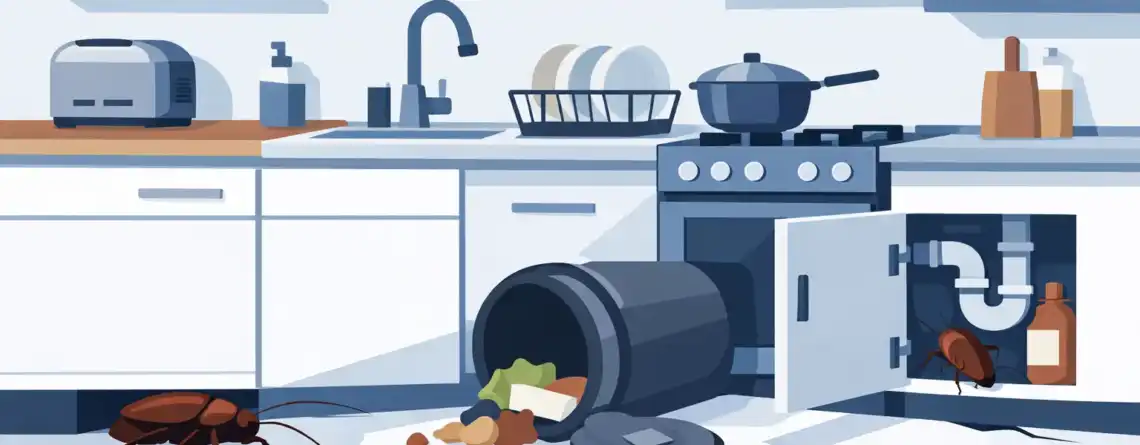
You usually do not see the full roach problem during the day. You see one near the sink, or one runs behind the trash can when the light comes on, and that is the warning. The real issue is where cockroaches hide in kitchens, because they settle into tight, dark, humid spaces that stay undisturbed for days or weeks.
Kitchens give cockroaches almost everything they need in one place – water, food residue, warmth, and hiding spots close to all three. That is why a clean-looking kitchen can still support an active infestation. A few crumbs on the counter are not always the main reason. More often, the problem starts in overlooked gaps, appliance cavities, plumbing access points, and storage areas that rarely get deep cleaned.
Where cockroaches hide in kitchens most often
The most common roach hiding place is under the kitchen sink. This area stays dark, and even a minor plumbing leak or condensation around the pipes can provide enough moisture to keep roaches active. Cleaning products stored there do not usually deter them. In fact, the clutter can make the space more attractive by giving them cover.
Behind and underneath major appliances is another high-risk zone. Refrigerators produce heat and often collect dust, food particles, and moisture around drip trays or floor edges. Stoves and ovens create warmth and grease buildup, especially in the narrow gaps along the sides. Dishwashers are also a favorite because they combine humidity, warmth, and hidden access behind the kick plate.
Cabinets can be just as problematic, especially the ones closest to the sink, dishwasher, or trash area. Roaches slip into hinge gaps, shelf corners, and the small openings around pipe entries. If dry goods are opened and not sealed well, cabinets become both shelter and food source.
Wall cracks, baseboard gaps, and spaces around electrical outlets matter more than many people think. Roaches do not need a large opening. A narrow crack behind a cabinet or a gap where plumbing enters the wall can become a regular pathway between hidden nesting areas and feeding spots.
Why kitchens attract roaches even when they look clean
A kitchen can appear spotless and still be appealing to pests. Roaches are opportunistic. They do not need visible mess to survive. A thin film of grease near the stove, water under the sink, crumbs under a toaster, or residue inside a trash bin can be enough.
The layout of many modern kitchens also works in their favor. Built-in cabinets, fixed appliances, false panels, and sealed corners create spaces people cannot easily inspect. If you live in an apartment or shared building, the issue may not even begin inside your unit. Roaches often move through wall voids, drain lines, and shared service ducts between neighboring kitchens.
This is one reason DIY treatment sometimes gives mixed results. You may kill the few insects you see, but the colony can remain hidden in areas you cannot reach. If the source is structural or connected to another unit, the activity often returns.
Hidden kitchen spots people miss
Some hiding spots are obvious once you know where to look, but others are easy to ignore.
The motor compartment at the back of the fridge is one of them. It is warm, sheltered, and rarely cleaned. Roaches can also gather beneath the rubber seals of older appliances if grease and moisture build up there.
Microwaves, coffee machines, and small countertop appliances can become secondary hiding areas too, especially if they are not moved often. Crumbs and condensation collect underneath, and the surrounding space stays quiet for long periods.
Stored cardboard is another issue. Roaches like the texture and shelter cardboard provides, particularly in pantry shelves or lower cabinets. If you keep grocery packaging, delivery boxes, or paper bags in the kitchen, those materials can hide egg cases and insects without drawing attention.
False ceilings, service shafts, and access panels are more common concerns in commercial kitchens, but they can affect residential properties as well. If there is warmth and a route to water, roaches will use it.
Where cockroaches hide in kitchens at night
Roaches are mainly nocturnal, so their movement changes after dark. At night, they leave cracks, appliance voids, and cabinet gaps to search for water and food. That means the places where you spot them are not always the places where they live.
If you turn on the light and see roaches near the sink, on the countertop, or around pet food, check the nearest sheltered spaces first. They usually stay close to a dependable water source. A kitchen with no active leaks may still have enough moisture from dish racks, floor mopping, AC condensation, or wet sponges.
Signs roaches are hiding in your kitchen
Seeing a live roach is the clearest sign, but it is not the only one. Small dark droppings that look like black pepper can appear inside drawers, along shelf edges, or behind appliances. You may also notice smear marks near corners and wall edges where roaches travel repeatedly.
Egg cases are another red flag. These are usually brown and capsule-shaped, often found in hidden corners, cabinet joints, or beneath stored items. A musty, oily odor can develop in more advanced infestations, especially in enclosed kitchens or pantry areas.
If the activity is ongoing, you may also find shed skins. Roaches molt as they grow, and those remains often collect in the same protected spaces where they nest.
What to check first before the problem spreads
Start with moisture. Look under the sink, behind the dishwasher, around the fridge line if there is one, and at any visible plumbing connection. Even a slow leak can sustain roaches.
Next, inspect the floor edges around large appliances. If you cannot move them safely, use a flashlight to check for droppings, egg cases, or grease-heavy debris along the sides. Open lower cabinets and look closely at corners, hinges, and pipe entry holes.
Then review food storage and waste handling. Unsealed grains, pet food, recycling, and bins without tight lids all increase the risk. This does not mean poor hygiene is the only cause, but reducing access to food and water makes treatment more effective.
The trade-off with DIY roach control
Store-bought sprays can give quick visible results, but visible results are not always lasting results. Sprays often affect exposed insects while leaving hidden nesting points untouched. In some cases, heavy spraying can push roaches deeper into walls, cabinets, or neighboring rooms.
Baits can work better because roaches carry the toxicant back to the colony, but placement matters. If bait is put in the wrong location, or if competing food sources remain nearby, results can be slow. Gel products also need monitoring and reapplication. For a minor issue, careful DIY steps may help. For repeat sightings, daytime activity, or commercial kitchens, professional treatment is usually the safer option.
How to make kitchens less attractive to roaches
The goal is not just to clean visible surfaces. It is to remove the conditions that help roaches stay hidden. Focus on leak repair, sealing gaps around pipes and baseboards, reducing cardboard storage, emptying trash daily, and deep cleaning under and behind appliances on a regular schedule.
Dryness matters as much as cleanliness. Wipe sinks at night, avoid leaving wet cloths in closed spaces, and do not leave standing water in trays or buckets. In busy homes and food businesses, recurring deep cleaning is often what makes the difference between temporary relief and real control.
If the kitchen is part of a larger property issue, treatment should be paired with inspection. That includes checking nearby bathrooms, utility areas, storage rooms, and any service ducts connected to the kitchen.
When to call a professional pest control team
If you are seeing roaches repeatedly, spotting them during the day, or finding droppings and egg cases in more than one area, the infestation is likely established. At that stage, surface cleaning alone will not solve it.
Professional pest control helps identify where cockroaches hide in kitchens, treat active nesting areas safely, and reduce the chance of reinfestation. This is especially important in homes with children or pets, and in restaurants, clinics, offices, and shared residential buildings where hygiene standards matter.
For customers in Doha who need a dependable, hygienic solution, Hegy International provides safe, practical pest control and cleaning support designed to address both the insects you see and the conditions helping them stay.
A roach problem rarely starts in the middle of the floor. It starts in the dark, narrow places people do not check often. When you know where to look, you can act earlier, protect your kitchen properly, and avoid letting a hidden problem turn into a larger one.