
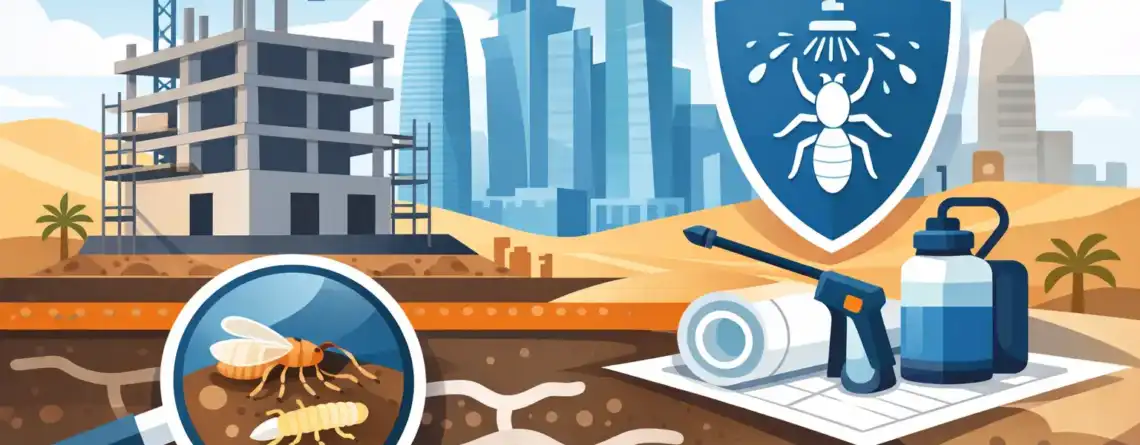
A termite problem usually starts long before you see a damaged door frame or hollow skirting board. By the time termites appear inside a finished home or commercial building, the colony may already be established below the slab or around the foundation. That is why Pre-Construction Termite Protection in Doha is one of the smartest decisions a property owner, builder, or developer can make before concrete is poured.
In Qatar, heat, soil conditions, irrigation around landscaped areas, and year-round construction activity create real termite risk. Waiting until a building is complete means treatment becomes more disruptive, more expensive, and less precise. A proper pre-construction barrier tackles the problem at the right stage, when access is open and protection can be built into the structure from day one.
Why termite protection should start before construction
Once a slab is cast and walls are up, termites gain hidden access points through expansion joints, pipe entries, cracks, and foundation contacts. Post-construction anti termite treatment can still help, but it often involves drilling, trenching, or repeated spot applications. That is not ideal when the building is already occupied, fitted out, or handed over to tenants.
Pre-construction treatment is different. It creates a treated zone beneath and around the future structure before those hidden entry points are sealed under concrete and finishes. Done correctly, it reduces the chance of infestation from the beginning and protects the building fabric where repairs would be most costly.
For villas, apartment buildings, offices, warehouses, and retail spaces, this matters for one simple reason: termite damage is rarely cosmetic. It can affect wood elements, door frames, built-in joinery, flooring transitions, and other structural or finishing components. In commercial settings, the problem also disrupts operations and damages confidence in property maintenance.
How Pre-Construction Termite Protection in Doha works
The process starts before the foundation slab is poured. A trained technician applies a professional-grade termiticide to the soil in key construction zones. The goal is not just to spray the area and leave. The goal is uniform coverage in the exact places where termites are most likely to enter.
Treatment is commonly focused on the soil under the slab, around foundation walls, near column pits, and at service entry points such as plumbing penetrations. These are high-risk routes because subterranean termites travel through soil and exploit small gaps where concrete or utility lines meet the structure.
Timing matters. If treatment is done too early and the soil is disturbed again by later site work, parts of the barrier can be broken. If it is done too late, some areas may already be inaccessible. This is why coordination between the pest control team, contractor, and site supervisor is important. A good provider will not treat blindly. They will assess the stage of work, identify where the barrier must be placed, and document what has been covered.
On active building sites, another practical issue is rework. If excavation, backfilling, or utility installation happens after treatment, some sections may need retreatment. That is normal and should be addressed honestly. Reliable service is not about claiming one visit solves everything in every scenario. It is about making sure the final treated zone is complete when the slab and surrounding structure are finalized.
What makes Doha properties vulnerable
Not every property faces the same level of risk, but Doha and nearby areas do present conditions that favor termite activity. Moisture is one factor. Even in a dry climate, irrigation systems, planted landscapes, leaking pipes, and condensation around service lines can create pockets of moisture that attract termites.
Construction style also plays a role. Modern buildings often include concealed joints, service ducts, and external landscaping elements that can give termites protected access. If untreated soil remains in contact with the building, colonies can travel unseen for long periods.
Property use matters too. A villa with garden irrigation, an office with regular water use, or a commercial unit with storage materials may face different risk patterns. That is why a one-size-fits-all approach is not enough. The treatment plan should reflect the site layout, intended building use, and the areas where future termite pressure is most likely.
What to expect from a professional treatment service
A proper pre-construction termite job should feel organized, not rushed. First, the site is inspected to confirm the treatment stage and identify target zones. Then the team prepares the application based on soil access, foundation layout, and upcoming construction steps. After treatment, there should be a clear record of the work completed.
For property owners and project managers, the biggest concern is often whether the service is safe and worth the cost. The answer depends on who is doing the work and what materials are being used. Professional technicians use approved products and measured application methods designed for termite control, not random general pest spraying. That distinction matters because termite barriers require technical accuracy.
Affordability should also be looked at in the right context. Pre-construction treatment is usually far more cost-effective than repairing termite damage after handover. It is also less disruptive than post-construction drilling and trenching inside a finished property. Paying for prevention at the right stage often saves much more later.
Common mistakes that weaken termite protection
The most common mistake is poor timing. If treatment is applied before major soil disturbance is complete, the barrier may be broken before the structure is even finished. Another mistake is incomplete coverage, especially around pipe penetrations, lift pits, expansion joints, or foundation edges.
Low-quality application is another risk. Uneven dosing, missed sections, or untrained labor can leave untreated gaps that termites eventually find. The damage from that kind of shortcut is not visible on day one, which is exactly why it becomes a serious problem later.
Some owners also assume that concrete alone blocks termites. It does not. Termites can exploit cracks, joints, and service openings that are easy to miss during construction. A slab is not a termite treatment plan.
Is pre-construction treatment enough on its own?
In many cases, it provides strong first-line protection, but long-term results still depend on site conditions after completion. If there are future leaks, uncontrolled soil contact, timber debris left near the building, or landscaping that bridges the treated zone, risk can increase.
That is why the best approach is preventive, then practical. Start with the correct barrier before construction. After handover, keep the site well maintained and inspect if there are warning signs such as mud tubes, hollow wood, blistering paint, or unexplained damage around frames and built-ins.
This is especially important for landlords, facility managers, and business owners who want to avoid bigger repair costs and service interruptions later. Prevention works best when it is part of overall property care, not treated as a one-time checkbox.
Who should arrange Pre-Construction Termite Protection in Doha
This service is not only for large developers. It makes sense for private homeowners building villas, landlords developing rental units, contractors managing new residential projects, and commercial stakeholders fitting out offices, shops, and mixed-use spaces.
If you are investing in a new property, protecting it before completion is simply the more efficient move. Access is easier, application is cleaner, and the barrier can be placed exactly where it needs to be. For anyone responsible for build quality and long-term maintenance, that is a practical advantage, not an optional extra.
For projects across Doha and nearby service areas, the key is choosing a team that understands local construction realities, works quickly on active sites, and uses safe, professional methods. Hegy International approaches termite protection the same way it handles pest control and facilities services overall – fast response, trained technicians, and results that hold up in real properties.
Choosing the right provider before you build
The right pest control company should be able to explain the treatment stage clearly, tell you what areas will be covered, and flag any site conditions that may require follow-up. If the answer is vague, that is a warning sign. Termite prevention is too important for guesswork.
A dependable provider will also respect the pace of construction. Building schedules move fast, and delays cost money. You need a team that can respond on time, coordinate with site staff, and complete treatment without unnecessary disruption.
When termite protection is done early and done correctly, you are not just buying a service. You are reducing future repair risk, protecting finishes before they are installed, and giving the building a stronger start. That is the right time to solve a termite problem – before the termites ever get in.