
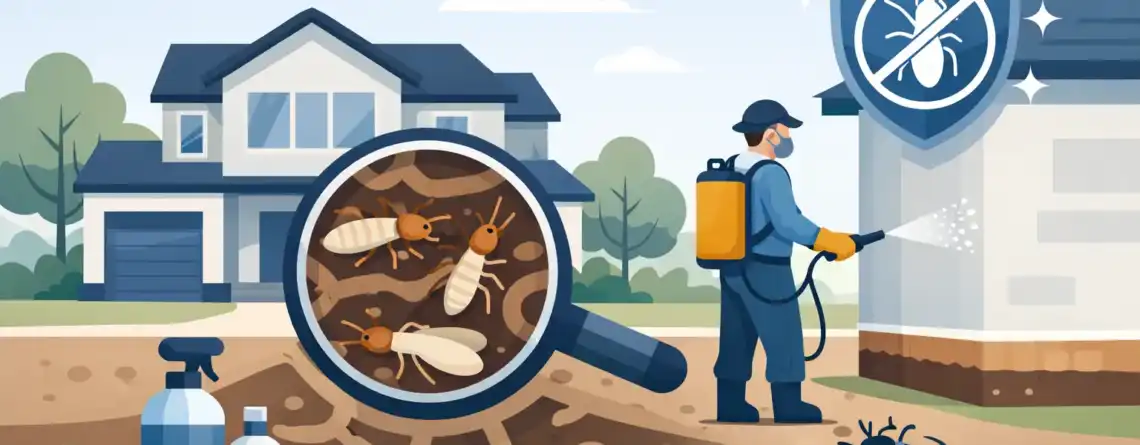
The first sign is rarely dramatic. It might be a thin mud line near a wall, a hollow sound in a door frame, or paint that starts bubbling for no clear reason. By the time most people start searching for anti termite treatment for homes, termites have already been active for weeks or months. That is why fast action matters. In Doha, Lusail, The Pearl, Al Wakrah, Al Rayyan, and West Bay, termite problems can move from minor to expensive quickly, especially in villas, ground-floor units, and properties with wooden fittings.
Why anti termite treatment for homes matters
Termites do not wait for a convenient time. They work quietly behind walls, under floors, and inside wooden structures where the damage is easy to miss. Unlike pests that announce themselves, termites usually stay hidden until the repair bill starts growing.
For homeowners and landlords, the risk is not just visible wood damage. Termites can weaken door frames, built-in cabinets, skirting boards, storage units, and any wood-based material that stays accessible to moisture or soil contact. For tenants, an untreated issue can affect comfort, hygiene, and confidence in the property. For property managers, delay often means higher maintenance costs and harder tenant conversations.
This is why anti termite treatment is not just another pest service. It is a property protection service. The goal is to stop current activity, block future access, and reduce the chance of repeat infestation.
What attracts termites into a home
Termites are usually drawn by a combination of shelter, moisture, and access. Wood near damp areas is a common target. So are properties with cracks around foundations, plumbing entry points, garden areas touching exterior walls, or untreated wood installed close to the ground.
In many homes, the problem starts outside and moves in. Termites may enter through tiny gaps, then spread through concealed areas before any clear sign appears indoors. That is why surface spraying alone is usually not enough. If the colony still has access to the structure, the problem tends to return.
It also depends on the age and design of the property. Older villas and houses may have more entry points. Newer buildings are not immune either, especially if landscaping, drainage, or construction joints create easy pathways.
Signs your home may already need treatment
Some warning signs are subtle, but they should not be ignored. Mud tubes on walls or near foundations are one of the clearest indicators. Damaged or hollow-sounding wood is another. You may also notice tight-fitting doors or windows, not because of weather, but because termite activity has affected the frame.
Sometimes people spot discarded wings near windows or light sources. In other cases, wooden furniture or built-in units begin showing fine surface cracks, soft spots, or unusual discoloration. These signs do not confirm the full extent of the infestation, but they are enough to justify an inspection.
The key point is simple. If you suspect termites, do not wait for major structural damage before acting. Early treatment is almost always more affordable than delayed repair.
The most effective anti termite treatment for homes
Professional termite control usually works best when it combines inspection, targeted treatment, and prevention. The right method depends on how far the termites have spread, where they are entering, and whether the property is already occupied.
Soil treatment and barrier protection
For many homes, soil treatment is one of the most reliable solutions. This method creates a treated zone around or under the property so termites are either eliminated on contact or blocked from entering. It is especially useful for villas, houses, and ground-contact structures where subterranean termites are the main concern.
This kind of treatment is not a quick cosmetic fix. When applied correctly, it addresses the route termites use to reach the building. That is why it often delivers stronger long-term results than basic spot treatment.
Drill and inject treatment
If termites are active inside walls, floors, or wooden fittings, technicians may use a drill and inject approach. This allows treatment to reach concealed galleries where termites are feeding and nesting. It is a practical option for localized infestations, especially when visible signs appear in specific rooms or wooden structures.
The trade-off is that localized treatment works best when the infestation is contained. If termites are entering from multiple points, a wider treatment plan may still be necessary.
Wood treatment and preventive applications
Treating exposed or vulnerable wood helps reduce the chance of future damage. This can be useful in homes with wooden doors, decorative paneling, storage units, or renovation work that introduces new timber into the property.
Preventive treatment is especially smart after repairs, before moving into a new property, or during routine property maintenance. Many customers wait until termites are visible, but prevention is usually the better value.
Why DIY termite control often falls short
Termites are not like ants in the kitchen or flies near a window. You can kill the visible ones and still leave the main problem untouched. Off-the-shelf products may reduce activity on the surface, but they rarely reach the colony, the hidden tunnels, or the full entry path.
This is where many property owners lose time and money. They treat the symptom, not the source. Meanwhile, termites keep moving behind walls or below the floorline. By the time professional help is called, the infestation is often larger.
A proper service starts with inspection, not guesswork. It identifies where termites are active, how they are entering, what materials are affected, and which treatment method will actually solve the problem.
What to expect from a professional service
A dependable termite service should be clear, practical, and results-focused. First comes the inspection. This helps confirm the activity level and the treatment scope. After that, the technician selects the most effective method for the property, whether that means soil treatment, injection, wood treatment, or a combination.
Safety also matters. In occupied homes, treatment should be handled with the right products, proper application standards, and clear guidance for residents. Many customers are concerned about children, pets, or indoor air quality, so professional handling is important.
Speed matters too. When termites are active, waiting several days for action is not ideal. A responsive local service can make a real difference by assessing the problem quickly and starting treatment before the damage spreads further.
Anti termite treatment for homes in villas, apartments, and rental properties
Not every property needs the same approach. Villas often require broader perimeter protection because of ground exposure, landscaping, and larger built-up areas. Apartments may need more targeted treatment if the issue is limited to internal woodwork, door frames, or shared building entry points.
Rental properties bring another factor – responsibility. Landlords want to protect asset value, while tenants want a safe and livable home without long delays. In these cases, clear inspection findings and prompt treatment help prevent disputes and reduce long-term cost.
For property managers and business owners, preventive scheduling can be a smarter decision than waiting for complaints. This is especially true in properties where presentation, hygiene, and maintenance standards directly affect reputation.
How to reduce the chances of termites returning
Treatment is the main step, but prevention supports the results. Keeping moisture under control helps. So does fixing leaks, improving drainage, and avoiding wood-to-soil contact where possible. Cracks around service lines, wall joints, and foundations should be checked and sealed when needed.
Storage also matters. Cardboard, scrap wood, and unused wooden materials should not be left in damp corners, outdoor areas, or against walls. Routine inspection of vulnerable spots can catch new activity early.
For homes with a history of termites, scheduled follow-up checks are a wise move. Long-term protection is usually stronger when treatment is paired with monitoring.
Choosing a service you can trust
When comparing providers, the lowest quote is not always the best value. What matters is whether the company can inspect properly, explain the treatment clearly, use safe and effective products, and respond fast when the issue is urgent.
That is what customers expect from a serious local provider. Hegy International focuses on practical termite control with trained technicians, eco-friendly product options, affordable pricing, and fast service for homes and commercial properties across Qatar. For many property owners, that combination matters just as much as the treatment itself.
If you have seen signs of termite activity, the right time to act is now, not after the wood starts failing. A quick inspection today can save major repair costs later, and that is the kind of decision smart property owners do not postpone.