
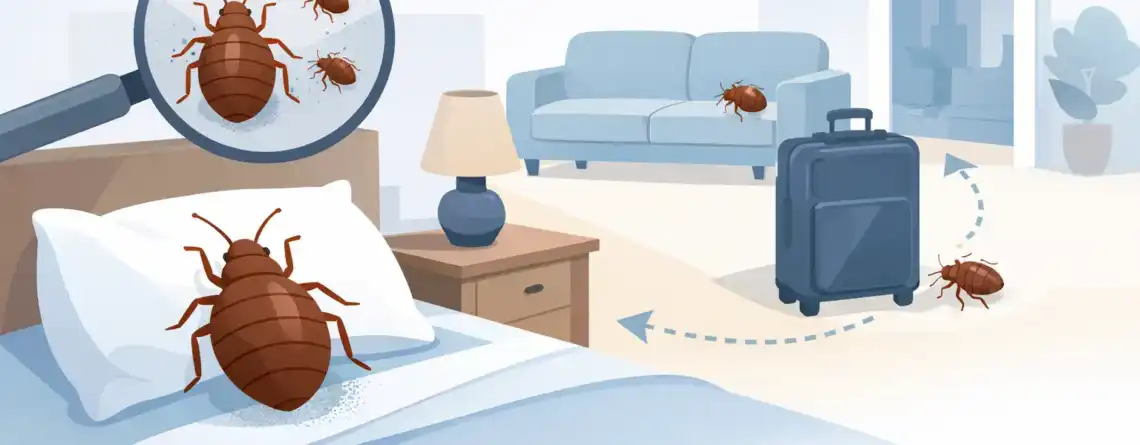
You usually do not notice bed bugs when they first arrive. There is no dramatic warning sign, no obvious trail, and no guarantee that a clean home is protected. If you are wondering how do bed bugs spread, the short answer is this: they travel by hitchhiking on people, belongings, furniture, and soft items, then settle into cracks and fabrics close to where people rest.
That is what makes them frustrating. Bed bugs do not spread because a place is dirty. They spread because they are small, persistent, and very good at hiding long enough to move from one location to another. For homeowners, tenants, and business managers, understanding how they travel is the first step toward stopping a larger infestation.
How do bed bugs spread from place to place?
Bed bugs are not strong travelers on their own. They do not jump like fleas, and they do not fly. Their main advantage is that they can crawl into seams, folds, corners, and tiny gaps, then get carried elsewhere without being noticed.
In most cases, they spread through luggage, clothing, handbags, backpacks, bedding, used furniture, and delivery items that have been stored in infested areas. A person may stay in a hotel, visit an apartment, sit on an upholstered chair, or bring in a secondhand mattress without realizing bed bugs or eggs are attached. Once those items enter a new room, the insects move out and begin looking for shelter near a sleeping or resting area.
This is why infestations can appear in homes, apartments, staff housing, hotels, offices, and even waiting areas. The spread is less about distance and more about opportunity.
The most common ways bed bugs spread indoors
Inside a property, bed bugs usually start near beds, sofas, or upholstered seating. They prefer to stay close to a food source, which means people. But once their numbers grow, they do not stay limited to one mattress.
Through luggage and personal belongings
Travel is one of the most common ways bed bugs move into a home. They can hide in suitcase seams, clothing folds, shoe linings, or toiletry bags. Even a short stay in an infested room can be enough for them to move into your belongings.
This does not mean every trip leads to bed bugs. It does mean luggage should never be treated casually if there is any suspicion. A single unnoticed bug can become a larger issue within weeks.
Through used furniture and mattresses
Secondhand furniture can save money, but it also carries risk. Bed bugs often hide in mattress piping, bed frames, headboards, sofas, cushions, and wooden joints. A piece may look clean on the surface while still holding insects deep in the structure.
The same caution applies to office chairs, waiting room seating, and fabric partitions in commercial spaces. Bed bugs are not limited to bedrooms if people spend long periods sitting in one place.
Between neighboring rooms or units
In apartments, villas with shared walls, or commercial buildings, bed bugs can spread from one room or unit to another through wall voids, electrical outlets, piping gaps, baseboards, and hallway traffic. They are slow, but if they cannot easily feed in one area or if the infestation grows, they will search for new hiding spots.
This is one reason why partial treatment often fails. If one room is addressed but neighboring areas are ignored, the problem can continue.
On laundry, linens, and soft furnishings
Bed bugs can cling to bedding, blankets, curtains, and piles of clothing. Shared laundry areas can also create risk if infested items are transported openly or left in contact with clean fabrics. In homes and businesses alike, soft materials give bed bugs plenty of shelter.
That said, laundry itself is not the problem. It is the handling and storage of infested fabrics before proper washing and drying that usually spreads them.
Can bed bugs spread from person to person?
Not in the same way as lice or mosquitoes, but yes, indirectly. Bed bugs do not live on the human body. They feed and then return to hiding places. However, they can travel on clothing, bags, shoes, uniforms, or personal items that people carry from one place to another.
So while a person does not “have” bed bugs on them all day, they can still accidentally transport them. This matters in family homes, shared accommodations, offices, schools, clinics, and staff housing where people and belongings move frequently between locations.
Why infestations spread faster than people expect
One of the biggest misconceptions is that bed bugs stay only on the bed. In reality, they spread outward as the infestation develops. You may first find them in mattress seams, but later they can appear in bed frames, behind wall art, in bedside tables, under carpets, inside sofa joints, or near curtain folds.
They also reproduce quickly enough that small delays become expensive ones. If the issue is caught early, treatment is more straightforward. If it is ignored while people continue moving bedding, sleeping in other rooms, or bringing items in and out, bed bugs can spread wider through the property.
There is also a human factor. People often respond by moving from one bed to another, carrying pillows and blankets to the sofa, or relocating furniture. That reaction is understandable, but it can give bed bugs access to new areas.
Signs that bed bugs may be spreading
Spread is not always obvious at first. Some people react strongly to bites, while others show no skin reaction at all. That is why relying on bites alone is risky.
Look instead for a pattern. Small dark spotting on mattress edges, shed skins, tiny pale eggs, and insects hiding in seams or cracks all point to activity. In larger infestations, you may notice signs extending beyond the bed to nearby furniture and room edges.
If multiple rooms start showing symptoms, or if people in different sleeping areas are noticing bites or spotting, the infestation may already be spreading through the property.
How to reduce the risk of bed bugs spreading
The right response depends on where the risk is coming from. A frequent traveler needs different habits than a tenant in a multi-unit building or an office manager responsible for staff areas.
Start with inspection. Check mattresses, headboards, sofa seams, and recently introduced items. Be cautious with secondhand furniture unless it has been professionally assessed and treated. After travel, inspect luggage before storing it, and wash and dry clothing promptly if there is any concern.
If you suspect bed bugs, avoid moving infested items through the home without sealing them properly. Do not drag mattresses from room to room. Do not shift bedding to another sleeping area and assume the problem stays behind. Containment matters as much as treatment.
For shared buildings, early reporting is essential. Quietly waiting to see if the issue goes away rarely works, especially when bugs can move between adjacent spaces.
When DIY efforts are not enough
Small preventive steps help, but active infestations usually need professional treatment. Bed bugs hide in places most people miss, and over-the-counter products often reach only exposed insects, not the ones tucked deep into frames, sockets, joints, and cracks.
There is also a safety issue. Misusing pesticides indoors, especially around children, pets, beds, and upholstered furniture, can create new problems without solving the original one. Professional pest control is not just about stronger products. It is about proper inspection, targeted application, follow-up, and reducing the chance of reinfestation.
For homes and commercial spaces in Doha, that matters even more when people need fast, reliable results without disrupting daily life. A professional team can identify where the infestation started, how far it has spread, and what combination of treatment and cleaning support is needed to restore a hygienic space.
How do bed bugs spread after treatment?
This depends on the quality and scope of the treatment. If only one visible area is treated, bed bugs may survive in nearby hiding places and return. If infested items are moved before or after treatment without proper handling, they can also reappear elsewhere.
Good treatment plans account for eggs, hidden harborages, and follow-up inspection. They also come with practical guidance for laundry, mattress handling, furniture positioning, and room preparation. That process is what helps stop spread, not just kill what is easy to see.
Bed bugs are difficult mainly because they exploit normal routines – sleeping, traveling, sitting, storing clothes, and moving household items. Once you understand that, their spread makes more sense, and prevention becomes more practical. The sooner you act on early signs, the easier it is to protect your home or workplace from turning a small problem into a property-wide one.