
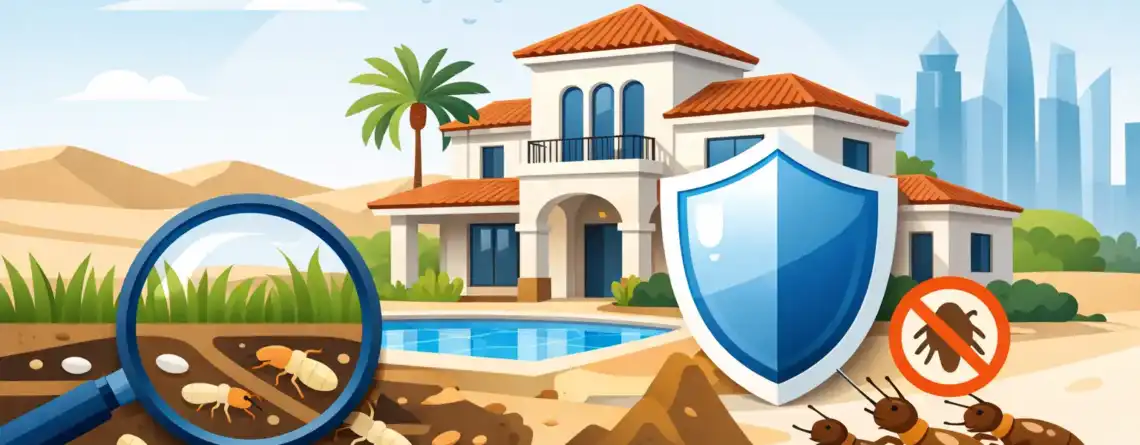
A termite problem in a villa usually starts quietly. No smell, no dramatic mess, no obvious warning until a door frame sounds hollow or paint begins to bubble for no clear reason. If you are looking for how to protect villa from termites in Qatar, the right approach is early prevention, regular inspection, and fast professional treatment when signs appear.
In Qatar, termites are more than a minor nuisance. They can damage wooden doors, built-in cabinets, skirting, furniture, and any structural wood hidden behind walls or under flooring. Villas are especially vulnerable because they often have larger footprints, landscaped outdoor areas, boundary walls, storage spaces, and more points where moisture and wood come together. The good news is that effective protection is possible when you focus on the causes, not just the insects you happen to see.
How to protect villa from termites in Qatar before damage starts
The best termite control is preventive control. Once termites establish a colony inside or near a villa, treatment becomes more urgent, more invasive, and sometimes more expensive. That is why the first step is reducing the conditions that attract them.
Moisture is one of the biggest factors. Termites are drawn to damp areas, so leaking pipes, AC drainage issues, roof seepage, and poor irrigation control around the property create risk. In many villas, termite activity begins near bathrooms, kitchens, garden edges, or shaded exterior walls where moisture stays trapped. Fixing these issues quickly is not just a maintenance job. It is part of termite prevention.
Wood-to-soil contact is another common problem. If wooden fixtures, fence elements, decorative features, or stored timber sit directly against the ground, termites get easy access. Even cardboard boxes and unused wood in outdoor storage rooms can become a bridge. Keeping wood elevated, dry, and away from direct ground contact helps cut off that route.
Good housekeeping matters more than many homeowners expect. Cluttered stores, closed utility spaces, and neglected corners make inspection harder and give termites time to spread unnoticed. A clean, organized villa is easier to monitor and safer to treat if a problem is found.
Where termites usually attack in a villa
Termites do not always attack the most visible wood first. In many cases, they move through hidden channels and feed from inside out. That is why infestations can look small on the surface but be much wider behind the scenes.
In Qatar villas, high-risk areas often include wooden door frames, wardrobes fixed against walls, kitchen base cabinets, false ceilings, under-stair storage, majlis areas with decorative woodwork, and outdoor service rooms. Garden zones also matter. If there are tree stumps, dead roots, mulch piled too close to the exterior wall, or poorly drained planting beds, the surrounding soil can support termite activity that later moves toward the building.
This is also why one-time spraying around the house is not always enough. Surface treatment may help with visible activity, but if the colony remains active underground or inside structural voids, the problem can return.
Warning signs you should not ignore
Termite damage rarely announces itself clearly. It tends to show up as subtle changes that are easy to mistake for humidity, normal aging, or poor paintwork.
Look for hollow-sounding wood, tight-fitting doors or windows, blistering paint, tiny piles that resemble dust, mud tubes along walls or foundations, and damaged skirting or trim. In some cases, you may notice winged insects near lights or windows, especially during a swarm period. That does not always mean the infestation is severe, but it does mean inspection should happen quickly.
One important trade-off is this: waiting for stronger proof may save you from calling too early, but it can also give termites more time to spread. When it comes to villas, caution usually pays off. A professional inspection is far less costly than replacing extensive woodwork later.
Practical prevention steps for homeowners
If you want to know how to protect villa from termites in Qatar in day-to-day life, the answer is a mix of maintenance and scheduled pest control.
Start by checking all plumbing and AC drainage lines. Any recurring leak, even a small one, should be repaired. Keep exterior walls clear of heavy soil buildup, mulch, or stacked materials. Do not store cardboard, wood scraps, or unused furniture directly on the floor in outdoor stores or service areas.
It also helps to inspect wooden fittings every few months. Press lightly on exposed frames, cabinets, and trims. If wood feels weak, sounds hollow, or shows fine cracks and unusual discoloration, do not assume it is just age. In a villa, early detection depends on paying attention to small details.
Landscaping should be managed carefully. Overwatering gardens close to the villa can raise termite risk, especially where irrigation keeps the soil constantly damp. A healthy garden is fine, but water should be controlled and directed properly. If you use wood-based decorative materials outdoors, keep them away from the structure.
For families with children or pets, safety is understandably a concern. Preventive termite control should be done with approved products and applied by trained technicians who know how to target the infestation without creating unnecessary exposure inside the home.
Why professional termite treatment matters
DIY termite products can sometimes reduce visible activity, but they rarely solve the full problem in a villa. Termites live in colonies, and the visible damage is only part of the picture. If treatment does not reach the source or establish a proper barrier, the infestation can continue quietly.
Professional termite control usually begins with inspection. The goal is to identify not just where damage appears, but how termites are entering, where moisture conditions support them, and whether activity is isolated or spread across multiple zones. This matters because treatment should match the property.
Some villas need localized treatment in affected wood or wall voids. Others benefit from soil treatment around the structure to create a protective barrier. In certain cases, a broader integrated plan is the better option, especially when the villa has garden features, annexes, or repeated moisture issues.
This is where experience matters. A dependable pest control team will explain what they found, what type of treatment is appropriate, and what follow-up is needed. The safest and most cost-effective result usually comes from treating the cause and the colony together, not just the visible symptom.
How often should a villa be inspected?
There is no single answer for every property. It depends on the age of the villa, the amount of wood used in interiors, previous termite history, moisture conditions, and whether there are gardens or outdoor structures close to the building.
As a practical rule, an annual termite inspection is a smart preventive step for most villas. If there has been previous termite activity, moisture problems, or ongoing renovation work, more frequent checks may be necessary. The point is not to over-service the property. It is to catch risk early while treatment is still straightforward.
For busy homeowners, scheduled inspections are often the easiest way to stay protected. They remove the guesswork and help prevent the kind of hidden damage that only becomes obvious when repair costs are already high.
What to do if you already suspect termites
Act quickly, but do not disturb the area too much. Breaking mud tubes, spraying random insecticide into cracks, or pulling apart damaged wood can scatter activity without eliminating the colony. That makes inspection harder and treatment less precise.
Instead, note where you saw the signs and arrange a proper assessment. If the problem is confirmed, treatment should be followed by practical prevention steps such as moisture correction, sealing entry points where appropriate, and removing wood debris or clutter from risk areas. A reliable provider will help connect those steps so the result lasts.
For homeowners who want both pest control and a clean, hygienic home environment managed under one service partner, companies such as Hegy International can be a practical choice because termite prevention works better when the property is also well maintained, regularly checked, and kept free of conditions that pests prefer.
Protecting a villa from termites is not about reacting to damage after it appears. It is about keeping the property dry, clean, monitored, and professionally treated when needed, so small warning signs never turn into major repairs.