
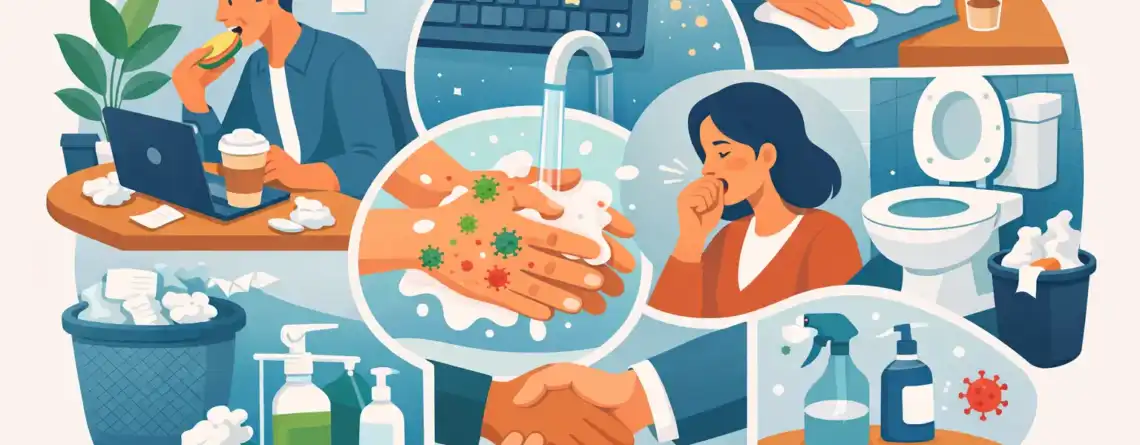
That stale smell near the pantry, fingerprints on the glass door, and a washroom that runs out of soap by noon are not small issues. They are early signs of the top office hygiene mistakes that quietly affect staff comfort, customer impressions, and even pest risk. In busy offices across Doha, these problems build fast when hygiene is treated as an occasional task instead of a managed system.
A clean office is not just about appearance. It shapes how employees feel during the workday, how clients judge your business, and how well your space stays protected from bacteria, odors, and infestations. Some mistakes are obvious, like neglected trash bins. Others are less visible, like dirty shared touchpoints or moisture under pantry sinks. Both can turn into bigger problems if they are ignored.
Why top office hygiene mistakes cost more than they seem
Many office managers wait until the problem becomes visible. By that point, the cost is rarely limited to cleaning. It can mean staff complaints, bad reviews from visitors, sick days, recurring odors, stained furniture, or a pest issue that spreads into storage areas and ceiling voids.
The trade-off is simple. Quick fixes may save a little time this week, but consistent professional hygiene saves money over the long term. It also protects the image of the business. For companies that host clients, interviews, or daily foot traffic, that matters more than most people admit.
1. Treating visible dirt as the only problem
If floors look fine, many teams assume the office is clean. That is one of the most common office hygiene mistakes. Germs collect on surfaces that rarely look dirty at all, including door handles, elevator buttons, meeting room remotes, shared keyboards, phone receivers, and printer panels.
These areas need routine disinfection, not occasional wiping. A good office hygiene plan separates general cleaning from touchpoint sanitizing. If your cleaner is only focusing on floors, desks, and bins, you may still have a hygiene gap in the most heavily used parts of the office.
2. Letting the pantry become a risk zone
The pantry is often the fastest place for hygiene standards to drop. Staff are busy, dishes get left in the sink, food spills stay unnoticed, and crumbs collect under appliances. Once moisture and food waste mix, pests become much more likely.
This is where office hygiene and pest control overlap. A clean-looking pantry can still hide grease buildup, drain odors, and cockroach activity behind cabinets or under counters. The fix is not complicated, but it does require consistency. Daily wipe-downs, regular drain cleaning, fast trash removal, and deeper scheduled cleaning around appliances make a major difference.
If your office has frequent pantry use, weekly attention may not be enough. High-use spaces usually need daily maintenance and periodic deep cleaning to stay under control.
3. Ignoring restroom supply checks
A restroom does not have to be visibly dirty to create a bad impression. Empty soap dispensers, wet floors, tissue shortages, and lingering odors send the same message to staff and visitors – the space is not being managed properly.
This is one of the top office hygiene mistakes because it affects confidence immediately. Employees notice it. Clients notice it. In some cases, it also increases hygiene risk because people are less able to wash and dry their hands properly.
Restroom cleaning should include more than mopping and bowl cleaning. It needs replenishment checks, odor control, disinfecting of high-touch areas, and attention to corners, partitions, and drains. Offices with high visitor traffic need more frequent checks than smaller private workplaces. Hygiene schedules should match actual use, not assumptions.
4. Using the wrong cleaning frequency
Some offices clean too little. Others clean often but not in the right way. A once-a-week cleaning plan may be enough for a small office with minimal foot traffic, but it is usually not enough for busy workplaces with shared desks, meeting rooms, pantries, and washrooms in constant use.
This is where many managers make a budgeting mistake. They choose the cheapest frequency first, then pay later through complaints, stains, emergency cleaning, or pest treatment. On the other hand, daily cleaning for every office is not always necessary either. It depends on headcount, visitor flow, pantry use, carpeted areas, and operating hours.
The best approach is practical. Match the service level to the way the office actually operates. That keeps hygiene standards high without overspending on tasks you do not need.
5. Forgetting soft surfaces and hidden dust zones
Hard floors and desktops get attention. Upholstery, carpets, curtains, and workstation partitions often do not. Over time, these surfaces trap dust, odors, allergens, and stains that regular surface cleaning will never remove.
This matters more in enclosed office environments where air conditioning runs for long hours. Dust buildup does not just affect appearance. It can also make the space feel heavier, less fresh, and less comfortable for staff.
Deep cleaning soft furnishings is one of the most overlooked ways to improve office hygiene quickly. Carpet cleaning, chair shampooing, sofa cleaning, and careful dust removal from vents, corners, skirting edges, and under furniture all help restore the environment. If your office smells clean for one hour after cleaning and stale again by midday, hidden fabric buildup may be part of the problem.
6. Leaving trash management too loose
Overflowing bins are easy to spot, but poor trash handling starts earlier than that. Mixed waste, food left overnight, liners not replaced properly, and bins that are never disinfected all contribute to odor and contamination.
In commercial offices, pantry waste is especially important. Even a small amount of organic waste left overnight can attract insects. Once pests start finding food in one area, they often expand to nearby cabinets, storage rooms, and wall gaps.
Good trash management is simple but non-negotiable. Bins should be emptied on time, cleaned regularly, and placed where waste is actually generated. If staff have to walk too far to dispose of food or packaging, hygiene habits usually get worse.
7. Assuming pests are separate from hygiene
A lot of businesses call pest control only after they see a cockroach or rodent. By then, the issue is already active. One of the biggest office hygiene mistakes is treating pests as a separate problem instead of part of the same sanitation system.
Poor cleaning routines, damp areas, food residue, and neglected storage all create the conditions pests need. That means prevention is not just about spraying. It is about reducing what attracts pests in the first place.
For offices in busy commercial areas, especially those with pantries, stored files, or low-traffic utility spaces, hygiene and pest prevention should work together. Professional cleaning can remove the conditions that support infestations. Professional pest control can then address hidden activity before it becomes disruptive. Hegy International often sees that the fastest long-term results come when both are handled together, not separately.
8. Relying on reactive cleaning instead of a plan
The final mistake is the one that causes most of the others. Many offices clean only when someone complains, when an inspection is coming, or when an odor becomes impossible to ignore. Reactive cleaning feels cheaper, but it usually leads to inconsistent standards and repeated problems.
A proper office hygiene plan should be clear about what gets cleaned, how often, and at what level. Daily tasks are different from weekly maintenance. Monthly deep cleaning is different from routine surface care. Emergency support may still be needed sometimes, but it should not be the main strategy.
The offices that stay consistently fresh and professional are not necessarily the ones spending the most. They are the ones using a realistic schedule, trained technicians, safe products, and regular checks in high-risk areas.
How to fix top office hygiene mistakes without overcomplicating it
Start by looking at your office the way a visitor would. Check the entrance, reception desk, meeting rooms, pantry, and washroom. Then look at it the way a technician would – moisture points, hidden dust, food residue, soft surfaces, and neglected touchpoints.
From there, build a routine that fits your space. A small office may only need targeted recurring service with periodic deep cleaning. A larger office with heavier traffic may need daily attention, restroom checks, pantry sanitizing, carpet care, and occasional pest control support. There is no single formula for every business, but there is one rule that always holds: hygiene works best when it is planned, not improvised.
A clean office should feel easy to work in, easy to trust, and easy to maintain. When the right systems are in place, your team notices it, your clients notice it, and problems stop building in the background.