
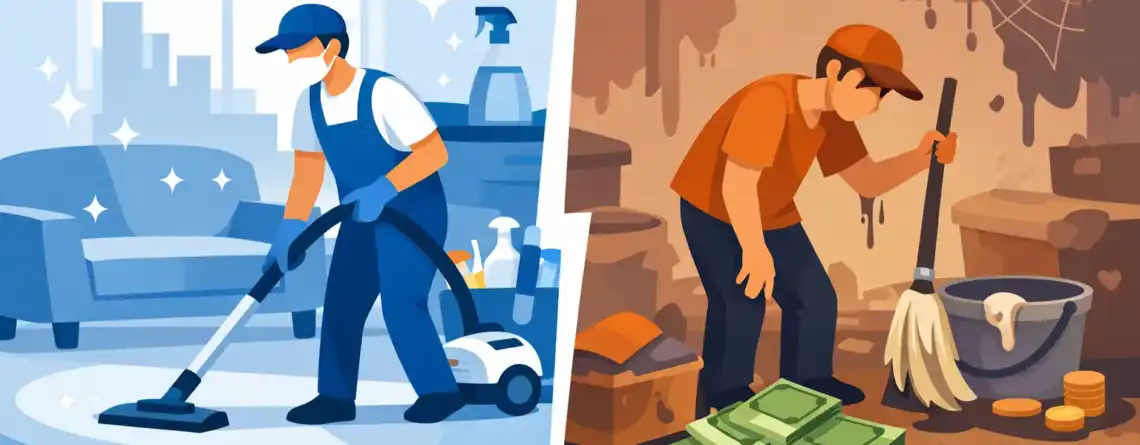
A cleaning quote that seems too good to pass up usually raises the same question a day later: what got left out?
That is the truth about cheap cleaning services. The lowest price on paper can look attractive, especially when you need urgent help for a home, apartment, office, or commercial space. But cleaning is not just about sending people with mops and sprays. It is about time, training, safe products, proper equipment, and consistent results. When the price drops too far, something else usually drops with it.
The truth about cheap cleaning services for homes and businesses
Cheap cleaning is not always bad. Some companies keep prices reasonable because they run efficiently, offer recurring plans, or focus on standard jobs with a clear scope. Affordable service and low-quality service are not the same thing.
The problem starts when pricing is unrealistically low. In most cases, that means the company has removed part of the service you expect, whether they explain it clearly or not. It could be fewer staff, less cleaning time, diluted products, poor supervision, or no real quality control. For residential customers, that often shows up as missed corners, dusty surfaces, streaky bathrooms, and kitchens that look clean but are not deeply hygienic. For commercial customers, it can mean inconsistent sanitation, rushed washroom care, and spaces that appear presentable for an hour but do not hold up through the day.
That is why the right question is not, “What is the cheapest cleaning service?” It is, “What am I actually getting for this price?”
Where cheap cleaning services usually cut corners
In professional cleaning, labor is a major cost. If a company offers a very low rate, it often compensates by reducing time on site. A team that should spend four hours in a villa may stay for two. An office that needs careful daily attention may get a quick surface wipe instead of proper cleaning.
The second common shortcut is product quality. Lower-cost operators may use harsh chemicals, generic cleaners, or solutions that are not suitable for the surface being treated. That matters more than many people realize. The wrong chemical can damage upholstery, dull flooring, stain bathroom fixtures, or leave behind strong residue. In homes with children or pets, poor product choices also raise obvious safety concerns.
Training is another area where cheap providers often save money. Cleaning done well is a skilled service. Staff need to know how to handle different materials, which products to use, how to disinfect correctly, and how to work efficiently without causing damage. Without that training, the job becomes inconsistent. One visit may seem fine, while the next feels careless.
Insurance, supervision, and accountability also matter. A very low quote may come from a provider operating with minimal oversight. If something is broken, missed, or handled unsafely, you may have limited recourse. For business owners and facility managers, that risk is not minor. It affects presentation, staff comfort, and in some settings, hygiene standards.
Cheap does not always mean affordable
This is where many customers get frustrated. They book a low-cost service to save money, then pay more later to fix the result.
A rushed deep clean often has to be repeated. Upholstery cleaned with the wrong method may need restoration. Floors treated poorly may wear faster. In offices and commercial spaces, inconsistent cleaning can lead to complaints from staff, customers, or visitors. In kitchens, clinics, schools, and other sensitive environments, poor sanitation can create much bigger issues than a disappointing first impression.
So while the upfront price looks smaller, the total cost often grows. Real value comes from work that is done properly the first time, with the right products, enough time, and a clear scope.
How to tell if a low quote is fair or a red flag
A fair quote usually comes with details. The company should explain what is included, how many cleaners are assigned, how long the service is expected to take, and whether materials and equipment are part of the price.
A red flag appears when the offer is vague. If the quote sounds like a flat low number without clarity on rooms, tasks, or conditions, that often leads to disappointment. The cleaner may arrive and say certain areas are extra. Or they may technically complete the job while skipping important parts that were never written into the service.
Watch how the company answers practical questions. Ask what kind of products they use, whether they are safe for children and pets, and how they handle delicate surfaces. Ask if staff are trained and supervised. Ask what happens if you are not satisfied. A dependable company answers directly. A weak provider often stays general or avoids specifics.
Another simple test is consistency. Reliable cleaning companies are built around repeatable service. They show up when scheduled, follow a checklist or process, and maintain standards from one visit to the next. If the only clear advantage is the price, that is rarely enough.
What good cleaning service actually includes
Professional cleaning should give you more than a quick visual improvement. It should create a genuinely cleaner, more hygienic space.
In a home, that means attention to bathrooms, kitchens, floors, touchpoints, dust-prone surfaces, and buildup in the places people often miss. In apartments and villas, it may also mean tailored care for glass, upholstery, carpets, and high-use family areas. If you have children, pets, or allergies in the household, product safety becomes part of the service quality, not a bonus.
In a business setting, strong cleaning supports daily operations. Offices need orderly desks and common areas, but also reliable restroom cleaning, waste handling, and sanitization of shared surfaces. Restaurants, clinics, schools, and retail spaces need a provider that understands hygiene expectations and can work to a schedule without disrupting business.
This is also why many customers prefer a company that can handle both cleaning and pest control needs when required. Cleanliness and hygiene are connected. If a provider understands both, the service tends to be more practical and more complete.
Why safety should never be the thing you sacrifice
One of the biggest risks with ultra-cheap cleaning is that safety becomes invisible until something goes wrong.
Unsafe chemical use can affect indoor air quality and leave behind residue on floors, counters, and furniture. Poor disinfection practices can create a false sense of cleanliness without actually reducing contamination. Untrained workers may mishandle electrical areas, fragile items, or specialized surfaces.
For commercial spaces, there is also reputation to think about. Clients notice dirty washrooms, dusty reception areas, and unpleasant odors. Staff notice when cleaning is irregular or ineffective. A low-cost vendor that misses standards can quietly damage the experience people have in your space.
Dependable providers invest in safer products, trained teams, and proper methods because those things protect both the customer and the property. That is one reason many households and businesses in Doha prefer service partners that focus on reliability over headline pricing alone.
Paying less can make sense in the right situation
There are times when a lower-priced option is perfectly reasonable. A small apartment needing light routine cleaning is different from a post-renovation deep clean. A tidy office with regular upkeep is different from a restaurant kitchen or a large villa with heavy weekly traffic.
The key is matching the service level to the real need. If the job is simple and the scope is clear, a budget-friendly plan can work well. If the property needs detailed cleaning, sanitization, stain treatment, or specialized care, the cheapest option is often the wrong fit.
That is where honest quoting matters. A trustworthy company will tell you when a standard clean is enough and when a deeper service is the better choice. Hegy International follows that practical approach because customers do not just want a lower invoice. They want a spotless, hygienic result they can rely on.
What smart customers look for instead of the lowest price
The best decision usually comes down to value, not the smallest number. Value means the service is clear, the team is trained, the products are safe, the schedule is reliable, and the result matches what was promised.
When comparing providers, look for transparency, not sales talk. Look for a company that respects your time, explains the scope, and treats cleanliness as both a visual and hygiene issue. That matters whether you are managing a busy home, preparing for guests, maintaining a professional office, or overseeing a commercial facility.
A cheap cleaning service can save you money only if the work is still done properly. If it leaves behind dirt, risk, or repeat costs, it was never the bargain it seemed to be.
The right cleaning service should make your life easier, your space healthier, and your standards easier to maintain. If a quote feels unusually low, pause before you book. A clean space is valuable, but peace of mind is part of the service too.