
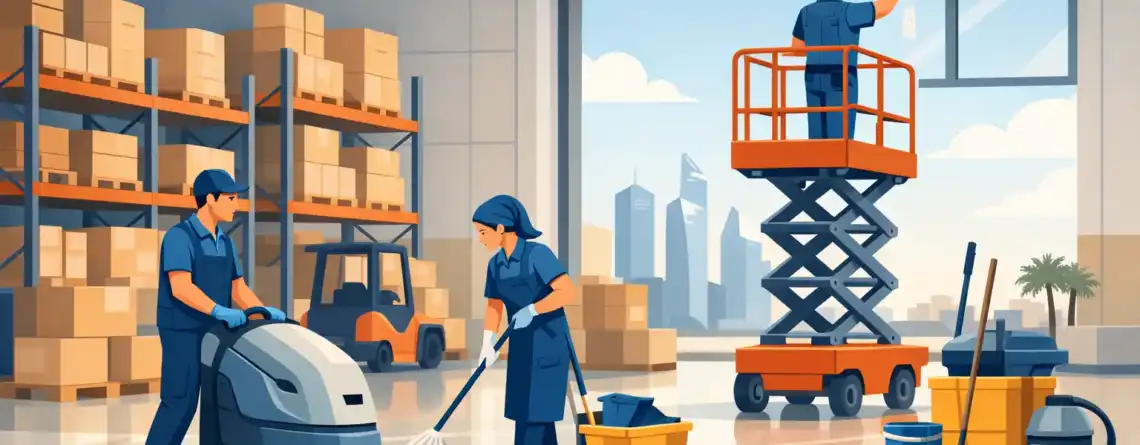
A dusty warehouse is not just a cleaning issue. It slows operations, increases safety risks, affects stock condition, and makes pest problems easier to ignore until they get expensive. That is why Warehouse Cleaning Solutions for Industrial Facilities in Qatar need to be practical, fast, and built around how active sites actually operate.
Industrial warehouses deal with a different level of wear than offices or retail units. Forklift traffic pulls in dirt and leaves tire marks. Loading zones collect sand, packaging waste, and oil residue. High shelving traps dust that eventually settles on products, machinery, and walkways. In Qatar, heat, dry conditions, and frequent movement between indoor and outdoor zones can make buildup happen even faster.
Why warehouse cleaning needs a specialized approach
A basic mop-and-bucket service is not enough for an industrial facility. Warehouses need cleaning methods that match the site layout, floor type, inventory sensitivity, and operating hours. The right service starts with a clear understanding of how the space is used.
For example, a storage warehouse with pallet racks and packaged goods has different needs than a facility handling industrial supplies, chemicals, or food-related stock. Some spaces need routine floor scrubbing and dust control. Others need deeper sanitation, waste area cleaning, restroom maintenance, and pest-prevention support as part of one coordinated service.
That is where many facility managers lose time. They hire one team for cleaning, another for pest issues, and then deal with delays between providers. A local company that can handle both hygiene and pest control service gives you faster action and fewer gaps in maintenance.
Warehouse Cleaning Solutions for Industrial Facilities in Qatar
The most effective warehouse cleaning plan focuses on the areas that affect safety, compliance, and daily workflow first. Floors are usually the top priority because dust, grease, and debris create slip risks and reduce the professional standard of the site. Machine scrubbing, stain removal, and targeted degreasing are often needed in high-traffic zones.
High-level dust removal also matters more than many operators realize. Beams, vents, rafters, light fixtures, and shelving tops collect fine dust over time. If that dust keeps falling back into working areas, your cleaning never really holds. A proper service addresses both visible dirt and the source of recurring contamination.
Loading bays, waste holding points, staff areas, and washrooms also need regular attention. These spaces are often overlooked during busy periods, but they directly affect hygiene standards and employee experience. If pests are a concern, these areas should be inspected alongside cleaning because spills, clutter, and neglected corners often attract insects and rodents.
What to expect from a reliable service provider
Speed matters, but so does planning. A dependable warehouse cleaning team should be able to work around shift schedules, low-activity windows, or section-by-section access. That reduces disruption and helps you keep operations moving.
You should also expect site-appropriate products and trained technicians. Eco-friendly chemicals are a smart choice in many industrial settings, especially where staff spend long hours indoors or where stock sensitivity is a factor. At the same time, cleaning products still need enough strength to deal with grease, ingrained dirt, and warehouse grime. The right balance depends on the facility.
Affordable pricing is important, but cheap service can cost more if the work is rushed or incomplete. In warehouses, missed buildup usually returns as safety concerns, poor presentation, or pest activity. Consistent cleaning is often more cost-effective than waiting for conditions to become severe.
Cleaning and pest control should work together
Industrial facilities rarely have only one hygiene issue. Dust, spills, waste, and hidden moisture can all support pest activity. If your warehouse stores packaging, textiles, food-adjacent products, or cargo, the risk is even higher.
That is why integrated service makes sense. Cleaning removes the conditions pests rely on, while pest control targets the infestation risk directly. Instead of reacting after signs appear, facility managers can use scheduled cleaning and prevention to keep standards under control. For many warehouses in Doha and nearby industrial areas, this saves both downtime and repeat service costs.
Hegy International fits this model well because it combines professional cleaning with pest control and fumigation support under one service provider. For warehouse operators, that means fewer phone calls, faster coordination, and a cleaner site that stays protected.
When scheduled cleaning makes more sense than one-time service
One-time deep cleaning is useful after construction, before inspections, after neglect, or when moving into a new facility. But for active warehouses, scheduled service is usually the better choice. Daily, weekly, or monthly cleaning keeps dust, grime, and hygiene problems from building into larger disruptions.
The right frequency depends on traffic, stock type, staffing levels, and exposure to outdoor dust. A busy logistics warehouse may need frequent floor care and washroom cleaning, while a lower-traffic storage site may benefit more from periodic deep cleaning and routine pest checks. There is no one-size-fits-all answer, and that is exactly why site assessment matters.
If your warehouse already shows dusty racks, marked floors, neglected corners, or recurring pest signs, waiting longer will not make the job cheaper. Fast response, trained technicians, and a service plan that matches the facility will always deliver better value than delayed cleanup. A clean warehouse protects people, products, and day-to-day operations – and that is what smart facility maintenance should do.