
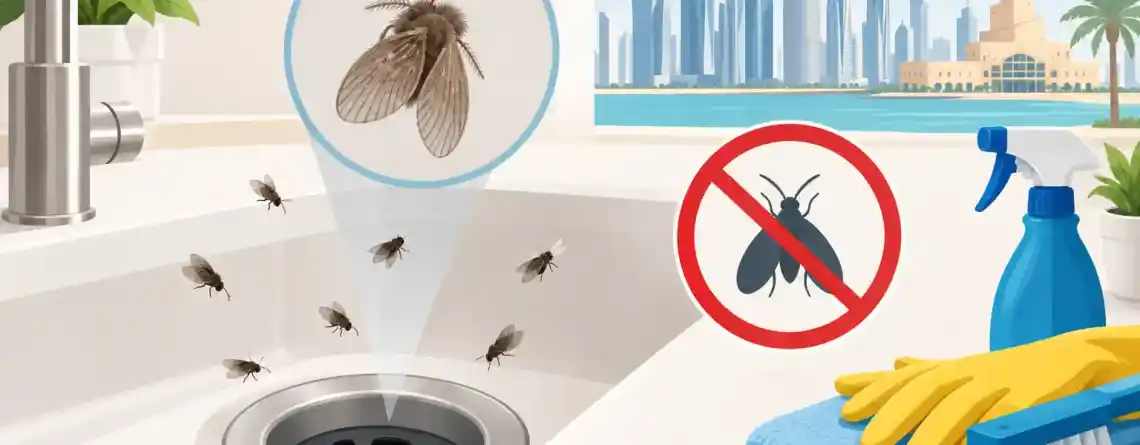
A few small, moth-like flies resting around a bathroom sink, floor drain, or pantry wash area usually point to a drainage issue, not a general cleaning failure. Drain Fly Problems in Qatar are common where moisture, organic residue, and rarely used plumbing fixtures create a protected breeding site. The visible flies are frustrating, but they are only the symptom. Lasting control depends on finding and removing the buildup inside the affected drain or nearby plumbing area.
For homes, villas, offices, restaurants, and managed properties, the right response starts with a clear inspection. Treating flying insects without addressing the source may reduce activity briefly, but it will not resolve the condition that allowed them to develop.
What drain flies look like and where they breed
Drain flies are tiny, fuzzy-looking flies with broad wings. They often appear gray, brown, or black and tend to move in short, weak flights rather than quickly crossing a room like fruit flies. They may be seen on tiles, walls, mirrors, or around sinks during the early morning or evening.
Their larvae develop in the slimy film that can build up inside drainpipes, floor drains, overflow openings, grease traps, condensate lines, and similar wet areas. This film may contain soap residue, hair, skin cells, food particles, grease, and other organic material. A drain does not need to look blocked from above to contain enough buildup for fly activity.
In Qatar properties, drain fly issues may be more noticeable in guest bathrooms, utility rooms, staff washrooms, vacant apartments, or areas with air-conditioning drainage. These locations can remain damp while receiving limited regular use. In commercial settings, pantry sinks, mop sinks, floor drains, and waste-handling areas deserve particular attention.
Why Drain Fly Problems in Qatar can keep returning
A surface spray may kill adult flies that are resting nearby, but it does not remove eggs and larvae inside the drain film. New adults can emerge within days if the breeding material remains. This is why a property may seem clear after treatment, then show activity again the following week.
The source is not always the drain where flies are first seen. Flies can travel from a nearby floor drain, a leaking pipe void, a neglected AC condensate tray, or a drain under a cabinet. In multi-unit buildings, the issue can also be connected to shared plumbing conditions or an adjacent area that requires building management attention.
There is also a difference between a drain fly issue and other small-fly problems. Fruit flies are usually linked to ripe produce, food waste, recycling, or spilled beverages. Phorid flies may indicate a more serious plumbing leak or drain-line concern. Accurate identification matters because the inspection and corrective work may differ.
How to check the likely source
Start by noting where and when adult flies appear. Activity concentrated in one bathroom, kitchen, or utility area helps narrow the inspection. Look for slow drainage, unpleasant odors, residue around drain covers, standing water, moisture under sinks, or leaks around pipe connections.
A simple overnight check can help confirm a suspected drain. After the area is dry, loosely cover the drain opening with clear tape, sticky side facing down, or use another safe temporary cover that does not create a plumbing hazard. If small flies collect beneath or around it by morning, the drain may be a source. Do not seal drains that must remain available for building safety or operational reasons.
Check less obvious locations as well. Bathroom sink overflow holes, shower drains, washing-machine connections, AC drain lines, and floor drains beneath equipment are frequently missed. For a vacant unit or little-used room, check whether the trap has dried out. A dry trap can allow odors and insects from the drainage system to enter the room.
If you manage a commercial premises, record the affected rooms, dates, approximate number of flies, cleaning schedule, and whether drains are used daily. This information helps establish whether the issue is isolated, recurring, or connected to a maintenance concern.
Clean the drain instead of masking the problem
The main task is physical removal of the organic film. Begin by removing the drain cover where practical and safe, then clean the accessible surfaces with a stiff brush and an appropriate drain-cleaning product. Pay attention to the inner sides of the pipe, not only the opening. Hair, grease, and residue caught around the cover should also be removed.
For kitchen drains, cleaning should include the sink strainer, the waste trap area where accessible, and nearby surfaces that collect grease. In bathrooms, focus on the drain cover, overflow opening, shower channels, and floor drain edges. Follow the product directions carefully and ventilate the area as required.
Avoid relying on hot water, bleach, or fragrance products alone. They may rinse away loose debris or reduce odor, but they may not reach or remove the established film on pipe walls. Never mix cleaning chemicals, including bleach with acidic or ammonia-based products. If a drain is fully blocked, backing up, leaking, or producing persistent sewer odor, stop using chemical treatments and arrange for qualified plumbing support.
After thorough cleaning, continue flushing and cleaning the affected fixture according to its normal use and maintenance requirements. Adult fly activity should begin to reduce as remaining adults complete their short lifespan. Depending on the extent of the breeding site, monitor the area for one to two weeks.
When professional pest control is the practical choice
A professional assessment is appropriate when flies persist after proper drain cleaning, appear in several rooms, return repeatedly, or are associated with foul odor, water leakage, or suspected drainage damage. This is especially relevant for restaurants, offices, retail spaces, clinics, staff accommodation, and properties where repeated insect activity affects visitors or daily operations.
Effective service should not be limited to spraying visible flies. The scope may include identifying likely breeding points, inspecting relevant drains and moisture areas, advising on sanitation and maintenance measures, and applying treatment where appropriate. If a plumbing defect is suspected, pest control and plumbing work may both be needed. One service cannot always replace the other.
Before requesting a quotation, provide the property type, affected rooms, approximate duration of activity, known leaks or odors, and whether drains are used daily. For commercial sites, mention access restrictions, operating hours, food-preparation areas, and any required documentation. Clear information allows the service provider to recommend a suitable inspection and treatment plan rather than applying a generic approach.
Hegy International can help Qatar homeowners, tenants, property managers, and business operators define the affected areas and arrange pest-control support based on the property’s condition and schedule. Confirm the work required, access arrangements, and any preparation instructions before the appointment.
Prevention for homes and managed properties
Drain fly prevention is largely a routine-maintenance issue. Drains that receive regular water flow and periodic mechanical cleaning are less likely to develop the residue flies need. In bathrooms and kitchens, remove hair and food waste before they enter the pipe, clean drain covers, and address slow drainage early.
For empty apartments, guest bathrooms, and seasonal-use spaces, run water into sinks, showers, and floor drains regularly to keep traps functioning. Facility teams should include overlooked drains in cleaning schedules, particularly mop sinks, service corridors, AC-related drainage points, and washrooms outside the main customer areas.
A recurring problem should be treated as a property-condition signal. It may be as simple as residue in a neglected floor drain, or it may indicate a leak, poor drainage flow, or an area outside the normal cleaning routine. The useful next step is not stronger fragrance or repeated spraying. It is a clear inspection, proper cleaning, and a service plan that addresses the actual source before the problem becomes routine.