
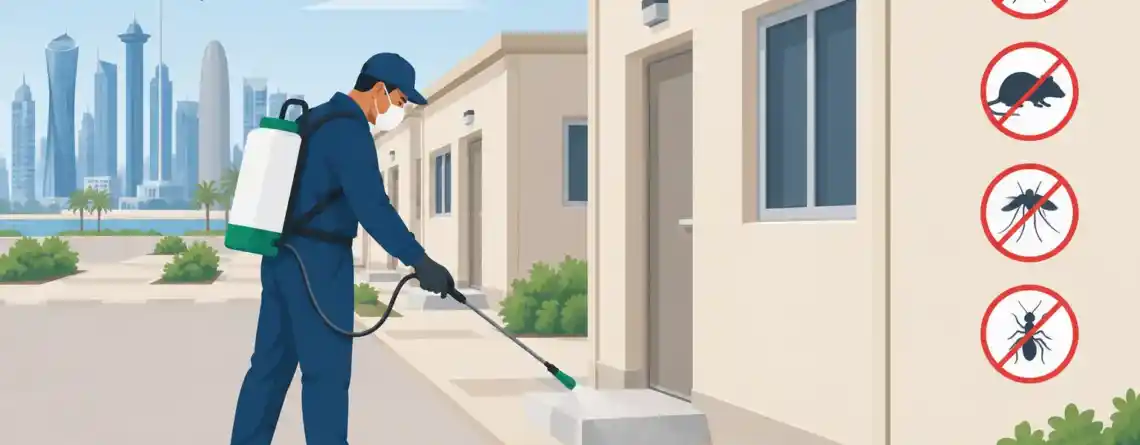
A single cockroach report in shared accommodation can quickly become a wider facilities issue. In staff housing, pests move through connected rooms, kitchens, drains, waste areas, and storage spaces, often before residents or supervisors see clear signs. Pest Control for Staff Accommodation and Labour Housing in Qatar needs to account for those shared conditions, as well as resident routines, site access, hygiene practices, and the need to keep disruption controlled.
For property managers, employers, and accommodation supervisors, the goal is not simply to remove visible insects or rodents. It is to establish a practical treatment plan that addresses active activity, reduces the conditions that support pests, and gives the site a clear process for reporting and follow-up.
Why staff accommodation needs a different approach
Staff and labor housing can have high occupancy, shared food-preparation areas, frequent turnover, and limited storage space. These factors do not mean a property will have a pest problem, but they can make a small issue spread more quickly if it is left unreported. A discarded food container in a room, a leaking pipe beneath a shared sink, or overflowing external bins can affect more than one unit.
Treatment also has operational constraints. Residents may work shifts, kitchens may be used throughout the day, and certain rooms may not be accessible at the same time. A provider should therefore scope the work around the accommodation layout and its daily use, rather than applying the same visit pattern used for a small apartment.
The likely pest matters as well. Cockroaches commonly require detailed attention to kitchen equipment, cabinets, drains, and wall gaps. Bed bug concerns require an inspection-led response, with clear preparation instructions for occupants and careful treatment of sleeping areas. Rodent activity may call for work around refuse points, utility routes, doors, and external perimeter conditions. Mosquito control depends heavily on eliminating standing water and reviewing outdoor drainage.
Pest Control for Staff Accommodation and Labour Housing in Qatar
An effective service begins with an accurate description of the property. Before confirming an appointment, provide the number of buildings, floors, rooms, kitchens, bathrooms, laundry areas, stores, waste locations, and outdoor spaces. Explain where activity has been reported, how long it has been occurring, and whether it is limited to a particular block or appearing across the site.
Photos can help identify visible conditions, but they do not replace a site inspection where activity is established or widespread. A professional assessment allows the treatment team to look for harborages, entry points, moisture, food sources, and sanitation issues that may be contributing to the problem. It also helps determine whether treatment should be focused, building-wide, or scheduled in phases.
For larger accommodation sites, a one-time treatment may be appropriate after a specific incident, but it is not always the most reliable long-term choice. Where occupancy is high or there is a history of recurring pest activity, scheduled visits can provide earlier detection and more consistent control. The right frequency depends on the pest, the site condition, the number of residents, and how quickly maintenance or housekeeping issues can be corrected.
Scope the work before treatment begins
Clear scope prevents confusion on the day of service. The accommodation manager should confirm which rooms and common areas are included, whether individual bedrooms will be treated, and whether outdoor areas, drains, garbage rooms, or kitchens form part of the quotation.
It is equally useful to identify exclusions. For example, a service may focus on cockroach activity inside blocks but exclude structural repairs, plumbing work, waste removal, or treatment in inaccessible personal storage. Pest control works best when these related issues are assigned and completed promptly, even when they fall outside the treatment team’s scope.
Ask about the treatment method, preparation requirements, expected re-entry time, and follow-up recommendations. These details affect resident communication and shift planning. A transparent quotation should reflect the property size, affected areas, pest type, visit frequency, and any special access arrangements needed.
Prepare residents and site teams properly
Treatment quality is closely linked to preparation. Residents do not need complicated instructions, but they do need timely, clear guidance in a language and format they can understand. Supervisors should communicate the visit date, rooms affected, preparation steps, and the period during which treated areas should remain undisturbed.
For kitchen-related pests, residents may need to remove or cover exposed food, clear cabinet areas where requested, and avoid washing treated surfaces immediately afterward. For bed bug treatment, instructions may include laundering bedding, reducing clutter around beds, and making sleeping areas accessible. Preparation varies by pest and product, so site teams should follow the specific instructions provided for their treatment.
Housekeeping and maintenance staff also have a major role. They should be able to report leaks, damaged screens, gaps around pipes, poor bin conditions, and repeated food waste issues. These are practical site observations, not blame. In shared housing, pest prevention is stronger when residents, cleaners, maintenance personnel, and supervisors know exactly what to report and who will act on it.
Combine treatment with daily prevention
Chemical treatment alone cannot compensate for persistent water leaks, unsealed food, or unmanaged waste. The most dependable programs pair professional pest control with basic housekeeping and maintenance controls. This does not require an unrealistic standard of perfection. It requires consistent attention to the locations where pests are most likely to find food, water, warmth, and shelter.
Kitchen counters, floor edges, appliance areas, sinks, and shared dining spaces should be cleaned on a defined schedule. Trash should be removed before bins overflow and external refuse areas should be kept orderly. Food should be stored in closed containers where possible, particularly in bedrooms or shared cupboards. Repairs to leaking pipes, faulty drains, broken door sweeps, and damaged window screens should be prioritized when they create clear access or moisture problems.
A simple reporting process is valuable. Accommodation supervisors can record the date, room or block, pest seen, and any nearby condition such as a leak or full bin. This gives the provider useful information at the next visit and helps distinguish an isolated sighting from repeat activity in the same area.
Choose a provider based on process, not promises
When comparing pest control services, look beyond a broad claim that a property will be pest-free. No responsible provider can guarantee lasting results when access points, waste handling, or sanitation conditions remain unresolved. A better indicator is whether the provider asks practical questions before quoting and explains what the treatment includes.
The service team should be able to discuss the pest concern, property layout, access arrangements, resident preparation, safety instructions, and follow-up needs. For larger sites, ask how visit records are handled and whether recommendations will be provided for maintenance or hygiene issues found during inspections.
Hegy International can help accommodation managers define the required work before scheduling a visit, including affected areas, access times, treatment concerns, and follow-up expectations. This makes it easier to arrange a service plan that fits the site rather than forcing the site into a standard package.
Plan for follow-up and recurring concerns
Some pests require more than one visit because eggs may hatch after initial treatment or because activity is emerging from concealed areas. Follow-up is particularly relevant for cockroaches, bed bugs, and rodent concerns. The required interval should be based on the pest, treatment method, infestation level, and conditions found at the property.
After a service visit, managers should review whether reported activity has reduced, whether residents followed preparation guidance, and whether identified repairs have been completed. If pests continue appearing in the same location, do not assume the treatment failed. Repeated activity can indicate an untreated adjoining area, a new food or water source, or an access route that still needs attention.
A well-managed accommodation site protects residents by treating pest control as part of routine property care. Confirm the affected areas, communicate clearly with occupants, complete the preparation and maintenance work requested, and request a quotation that reflects how the housing actually operates.